
Cavanillesia platanifolia
Cavanillesia platanifolia
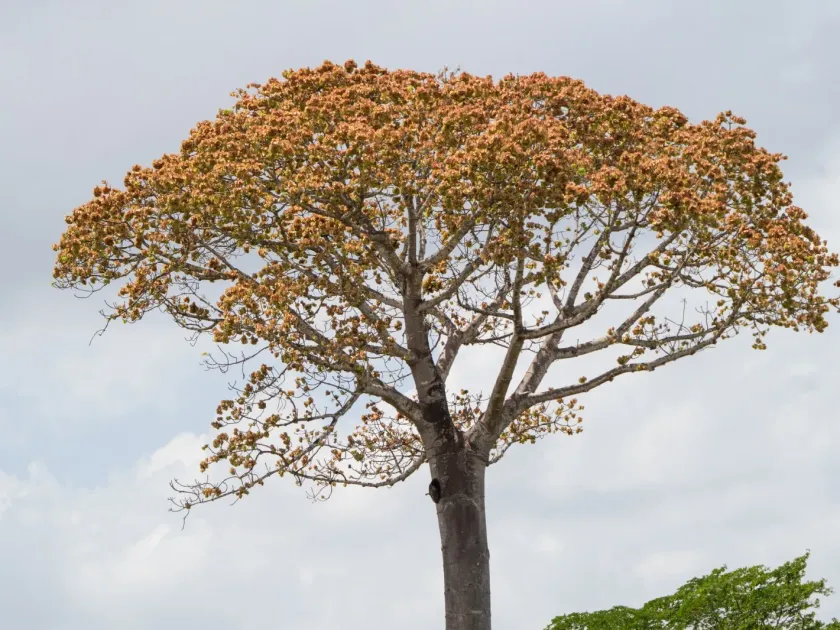
Description
Growing requirements
Cavanillesia platanifolia is a notable member of the Malvaceae family, often recognized by its impressive, barrel-shaped trunk. This structural adaptation allows the tree to store significant amounts of water, an evolutionary advantage in its native tropical habitats.
The species is primarily native to Central and South America, thriving in moist, lowland tropical forests. It requires high humidity and year-round warm temperatures, making it a distinct crop for specialized tropical forestry and conservation efforts.
Soil requirements are centered on excellent drainage. While the tree appreciates consistent rainfall, it cannot withstand waterlogged conditions, which lead to root asphyxiation. Fertile, loamy, or volcanic soils provide the best conditions for rapid growth and healthy development.
Full sun exposure is crucial for the development of the canopy and the structural integrity of the trunk. In shaded forest environments, the growth rate of this species is significantly reduced, highlighting its preference for open or light-penetrating environments.
Economic value is driven by the production of 'quandu' wood. This timber is exceptionally lightweight and buoyant, comparable to balsa wood. It is widely utilized in the manufacturing of model aircraft, life-saving equipment, and specific insulation components where weight is a critical factor.
Main diseases and pests
Root rot pathogens represent the most significant threat to Cavanillesia platanifolia. These fungi thrive in environments where soil moisture exceeds capacity, leading to the rapid decay of the taproot system and eventual decline of the tree health.
Stem-boring insects can cause localized damage, particularly in younger trees. Monitoring for exit holes and ensuring that the tree is not suffering from drought stress helps to mitigate the attractiveness of the plant to these wood-boring pests.
Heavy storm winds pose a risk to the canopy, especially when the trees are loaded with moisture. While the trunk is structurally strong, the heavy branches can break under extreme pressure, emphasizing the need for proper spacing in plantation management.
Deficiency in specific soil nutrients, particularly magnesium and calcium, can lead to foliage discoloration. Regular soil testing and balanced organic fertilization are essential to maintain the photosynthetic capacity required for sustained growth.
Competition from fast-growing weeds and invasive vines often threatens the establishment phase of the plantation. Strict management protocols, including manual clearing, are necessary to prevent the smothering of seedlings during their critical first few years.