
Bur chervil
Caucalis platycarpos
Description
Growing requirements
Bur chervil (Caucalis platycarpos) is an annual herbaceous plant belonging to the Apiaceae family. It is predominantly recognized as a weed in various agricultural systems, particularly in cereal fields where it competes for soil moisture and sunlight.
The plant thrives in well-drained, fertile soils, often showing a preference for calcareous or stony substrates. It is widely distributed across temperate regions and is highly adaptable to the ecological conditions of European and Eurasian agricultural landscapes.
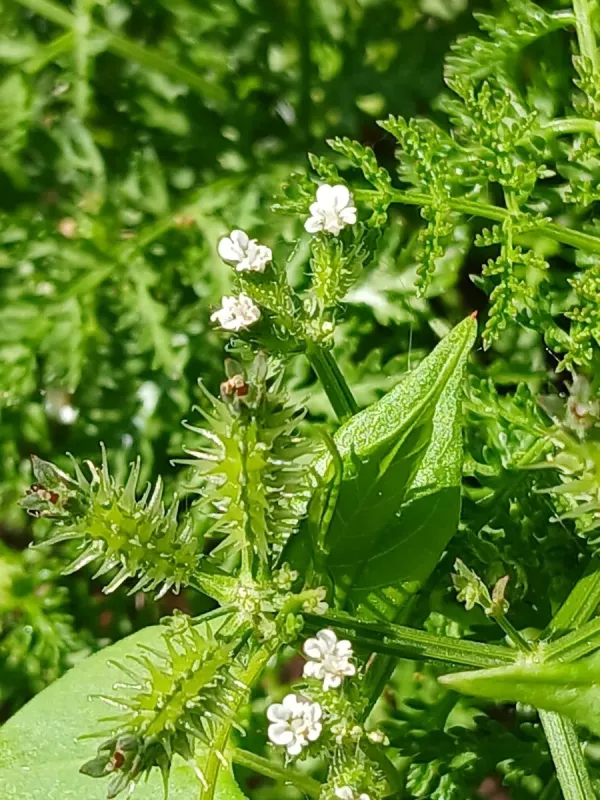
Botanically, it is characterized by its pinnate leaves and complex umbels of small flowers. A distinct feature of the genus is the presence of hooked prickles on its mericarps, which serve as an adaptation for seed dispersal by animals and human activity.
The root system is typically a taproot, allowing the plant to reach deeper soil water reserves. This physiological trait enables the weed to persist even during dry spring seasons when cultural crops might experience significant water stress.
In terms of agricultural impact, Bur chervil is considered a nuisance due to its ability to proliferate in disturbed soils. Its presence in grain crops can complicate harvesting and reduce the quality of the harvested yield, necessitating effective management strategies.
Main diseases and pests
Common diseases affecting this species include powdery mildew and rust fungi, which are prevalent in dense crop stands where air circulation is restricted and humidity levels are elevated.
Pests that occasionally infest Bur chervil include various species of aphids and specialized larvae of the umbellifer moth, which may also pose a risk to commercially grown related crops like carrots or parsnips.
Management in modern farming relies heavily on integrated weed control, incorporating regular soil tillage to destroy seedlings and prevent the build-up of the soil seed bank over successive crop seasons.
Chemical control using selective herbicides is common practice when the weed density exceeds economic threshold levels in wheat or barley crops during the early stages of the growing season.
Crop rotation remains the most sustainable method of control. By alternating between different crop types and tillage practices, farmers can disrupt the life cycle of Bur chervil and significantly suppress its dominance in the field.