
Caucalis bifrons
Caucalis bifrons
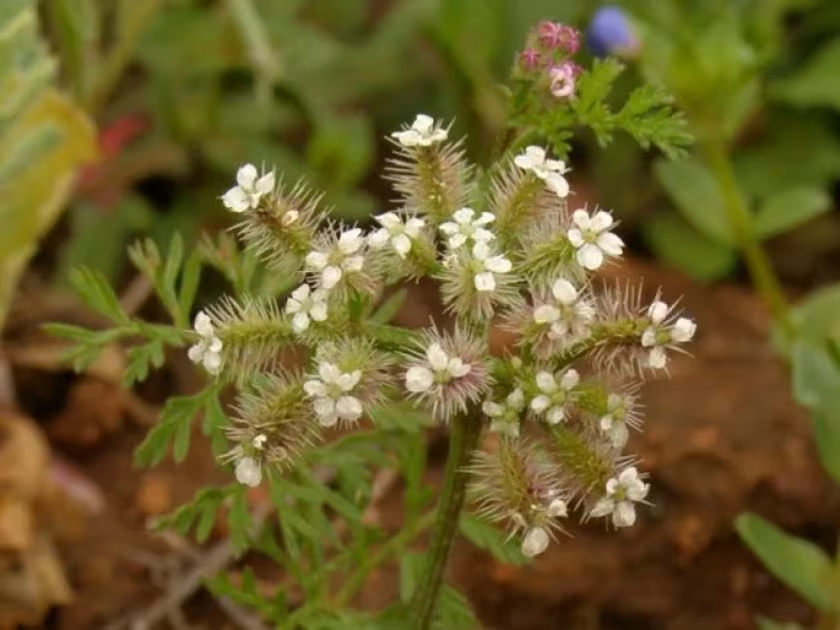
Description
Sowing dates
Caucalis bifrons is not classified as a commercial agricultural crop, therefore it lacks standardized sowing procedures or planting schedules.
The plant primarily spreads through natural seed dispersal, where seeds fall to the ground following maturation in late summer.
Seed germination typically occurs in early spring, as the soil warms up and moisture levels become optimal for the emergence of seedlings.
In experimental botanical conditions, seeds are sown at a shallow depth to ensure sufficient light exposure for the developing sprout.
Natural stratification during the winter months is essential for breaking seed dormancy and ensuring uniform growth throughout the spring.
Growing requirements
As a member of the Apiaceae (Umbelliferae) family, this plant is well-adapted to meadows and open, grassy hillside environments.
It favors fertile, well-drained soils that offer a neutral pH level, avoiding areas that are prone to prolonged waterlogging.
Light requirements are high, as the species requires direct sunlight to complete its lifecycle and produce viable reproductive seeds.
The plant is suited for climates with temperate characteristics, avoiding regions with extreme frost or severe, consistent heat waves.
Soil composition should ideally be loamy to allow for adequate oxygen circulation around the root zone, preventing stagnant growth.
Main diseases and pests
The species may face challenges from common fungal infections like powdery mildew, which thrives in humid conditions and poor airflow.
Root system health can be compromised by various soil-borne pathogens if the environment remains excessively saturated for long periods.
Insect pests, such as aphids and specific moth larvae, frequently feed on the tender parts of the plant, including leaves and stems.
Viral infections transmitted by insect vectors can cause stunted development and discoloration of the foliage throughout the growth stage.
Effective management in a controlled environment requires the removal of infested plant debris to prevent the spread of recurring pathogens.