
Southern cattail
Typha domingensis Pers.
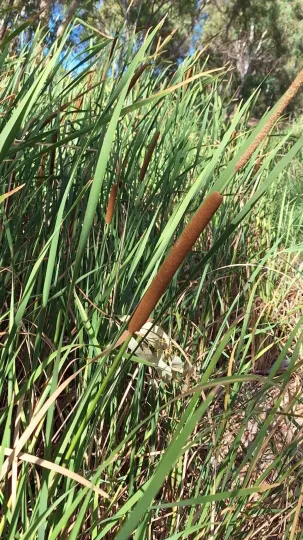
Description
Sowing dates
Propagation of Southern cattail is primarily performed through vegetative division of rhizomes during the spring season when soil temperatures reach 12–15°C. Planting in May ensures the plants establish a strong root system before the peak heat of the summer months.
Seed-based propagation is less common due to the small size of the seeds and their specific requirements for germination, including consistent saturation and high light intensity. Seeds are typically sown in containers filled with nutrient-rich silt or peat to initiate early growth.
In commercial plantations, rhizome fragments are planted in prepared drainage channels or shallow ponds at a depth of 10–20 cm. A planting density of 2 to 4 plants per square meter is sufficient to ensure a rapid cover of the field within the first growing season.
Natural dispersal occurs via wind-blown or water-borne seeds, allowing the plant to colonize new silt deposits quickly. In managed systems, farmers must regulate the spread of the plants to ensure they do not invade surrounding agricultural infrastructure.
The establishment phase takes about four to six weeks, during which it is critical to maintain a stable water level. Allowing the roots to dry out at this stage can result in the mortality of young shoots and severely reduce the productivity of the entire plantation.
Growing requirements
Southern cattail (Typha domingensis) is a robust hydrophyte belonging to the Typhaceae family. It thrives in sunny, wetland environments with slow-moving water and nutrient-rich bottom sediments, making it an ideal choice for swampy or degraded areas.
The plant demonstrates a broad tolerance for pH levels ranging from 6.0 to 8.5. Additionally, its ability to tolerate brackish water makes it a superior candidate for land reclamation and phytoremediation projects in saline environments.
Optimal growth requires a warm climate with average daily temperatures between 20°C and 30°C. While the plant can survive in more temperate zones, its biomass production is significantly higher in tropical and subtropical regions where the growing season is longer.
Light availability is the primary limiting factor for successful cultivation. Southern cattail requires full sun exposure throughout the day; shading by trees or tall structures leads to elongated, weak stems and lower cellulose accumulation.
The species is well-adapted to fluctuating water levels, tolerating temporary inundation up to one meter deep or brief periods of soil saturation. However, maintaining a consistent water depth of 20–50 cm is ideal for maximizing both shoot health and total yield.
Yield
Southern cattail is highly valued for its exceptional biomass production, often ranking among the most productive wetland species. Under optimal conditions, a mature plantation can produce between 20 and 30 metric tons of dry matter per hectare annually.
Peak productivity is typically reached in the third year after establishment, once the rhizome network has fully occupied the substrate. Annual harvesting of the above-ground biomass does not deplete the plant, provided the rhizomes remain healthy and submerged.
Because the plant efficiently absorbs nutrients from the water and soil, it does not generally require supplemental fertilization. The yield is largely driven by the availability of nitrogen and phosphorus already present in the wetland ecosystem.
With a cellulose content of 40–45%, the stems are a high-quality feedstock for the paper and composite material industries. The uniform structure of the stands allows for efficient mechanized harvesting using aquatic mowers or specialized equipment.
The plant's biomass has high energy density, making it a viable candidate for pelletization and combustion for heat. The rapid regeneration cycle ensures that continuous harvesting remains economically sustainable over many years.
Main diseases and pests
Fungal infections, particularly rust diseases caused by Puccinia species, represent the primary pathological threat to Southern cattail. These infections manifest as reddish-brown spots on the leaves and can significantly reduce the overall photosynthetic capacity.
Insect pests, such as certain species of stem-boring moth larvae, can damage stems and reduce the quality of the harvested fiber. Monitoring for such outbreaks during the active flowering season is essential to prevent significant losses.
Root rot and crown decay may occur in stagnant, anaerobic waters where decomposition products accumulate. Maintaining proper water circulation or aeration in culture ponds is the most effective way to prevent these physiological disorders.
Competition from invasive reeds or other aquatic weeds can severely limit the growth of young cattail plantations. Regular weeding and maintaining optimal water levels are necessary to ensure the Southern cattail maintains its dominance in the managed plot.
Anthropogenic pollution, especially high concentrations of heavy metals or industrial chemicals, can stress the plant and reduce its vigor. Although cattails are used for phytoremediation, extreme levels of toxicity can still negatively affect biomass yield.
Harvesting
Harvesting is typically scheduled for late summer or autumn once the stems have reached maximum physiological maturity and lignification. Using amphibious harvesters minimizes disturbance to the bottom sediments and protects the root system.
Once harvested, the material must be dried rapidly to prevent fungal growth and decomposition. Air-drying in thin layers in well-ventilated areas ensures the moisture content drops to a safe storage level of approximately 15%.
For construction applications, stems are harvested whole and bundled for use as insulation or decorative paneling. This requires careful handling during the collection process to preserve the structural integrity of the individual stalks.
In bioenergy production, the biomass is shredded and compressed into pellets or briquettes. High-pressure processing allows for the creation of a dense, energy-efficient fuel source with consistent burning characteristics.
Sustainable harvesting practices involve leaving a portion of the root system intact to ensure quick recovery for the following year. Effective management of the regrowth cycle is key to maintaining the long-term productivity of the plantation.