
Carolina laurelcherry
Prunus caroliniana (Mill.) Aiton
Description
Growing requirements
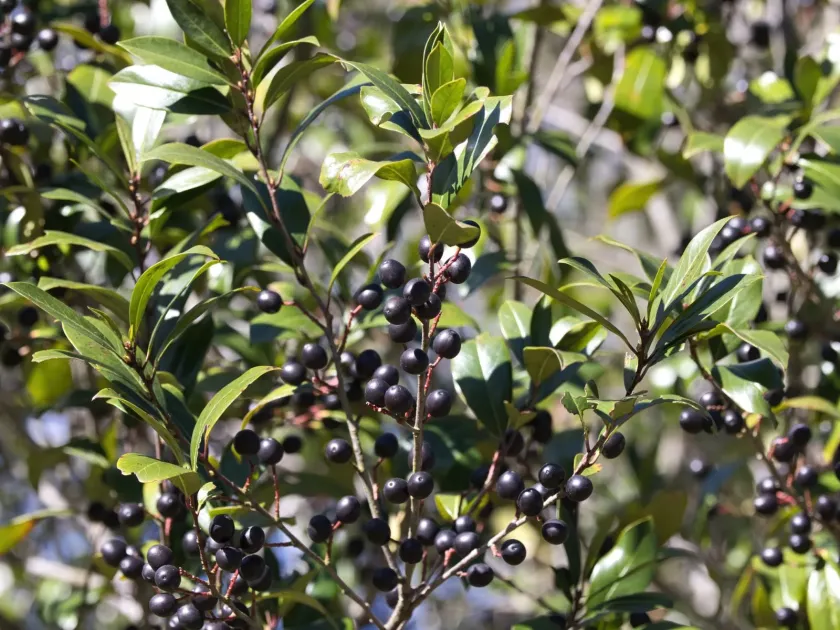
Carolina laurelcherry (Prunus caroliniana) is a fast-growing evergreen shrub or small tree belonging to the Rosaceae family. It is native to the southeastern United States and is highly valued for its dense, glossy dark green foliage.
This species is highly adaptable to various soil types, provided that the ground is well-drained. It performs best in partial shade to full sun conditions, making it an excellent candidate for residential landscaping and screening purposes.
Regarding climate, the plant requires mild winters and is sensitive to extreme frost. In colder regions of its hardiness zone, it is recommended to plant it in sheltered locations to prevent foliage damage caused by cold winds.
The agronomic maintenance involves regular pruning to maintain a dense habit, especially when used for hedges. It responds exceptionally well to shearing and can be shaped into formal or informal structures throughout the growing season.
Fertilization should be performed in early spring using a balanced NPK fertilizer to support lush growth. Mulching around the base of the plant helps retain soil moisture and suppresses weed competition in the root zone.
Main diseases and pests
Powdery mildew is a common fungal issue that affects foliage during seasons with high humidity and poor air circulation. Improving spacing between plants significantly reduces the risk of this infection.
Bacterial blight can cause necrotic spots and wilting of branches. Early detection is crucial, and infected parts should be pruned back to healthy wood, with tools disinfected after every cut to prevent cross-contamination.
Scale insects and spider mites are the most frequent pests. They feed on plant sap, causing yellowing and leaf drop. Horticultural oils or systemic insecticides are usually effective in managing these infestations.
Root rot, caused by excessive soil moisture, is a significant threat to the longevity of the plant. It is essential to choose planting sites with excellent natural or artificial drainage to avoid saturation.
Minor leaf spots may occur due to various pathogens; however, they rarely result in significant damage if the plant is kept in good health through appropriate irrigation and nutrient management.