
Saguaro
Carnegiea gigantea (Engelm.) Britton & Rose
Description
Sowing dates
Growing Carnegiea gigantea from seed is a patient, long-term endeavor that requires specific environmental controls. Spring is the most suitable time for sowing to align with the natural increasing daylight cycle.
The substrate must be sterile, highly porous, and composed of mineral materials like grit, perlite, and a minimal amount of organic soil. Seeds are sown on the surface and pressed lightly into the media.
A humid environment is essential for germination, usually achieved by covering containers with plastic film or glass covers. Ventilation should be provided periodically to prevent fungal growth.
Temperatures during germination should remain constant, ideally between 25°C and 30°C. Bright, indirect light is necessary until the seedlings develop their initial protective spines.
Seedling development is remarkably slow; therefore, transplanting should only occur once the plant has developed sufficient structural integrity, often after one or two full growing seasons.
Growing requirements
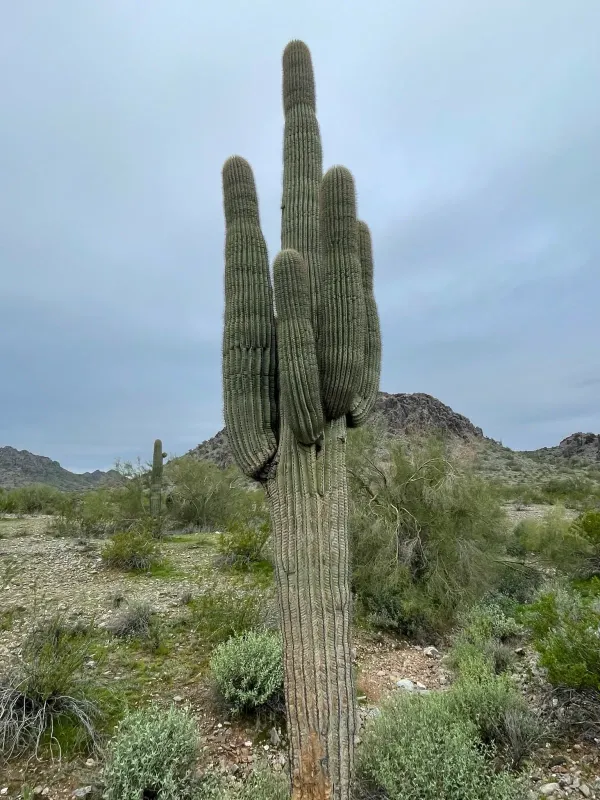
The Saguaro (Carnegiea gigantea) is the iconic giant cactus belonging to the Cactaceae family, native to the Sonoran Desert in North America.
The species requires full, direct sun exposure for most of the day to maintain its structural rigidity and to sustain its metabolic functions.
Soil requirements focus on drainage; the plant cannot tolerate waterlogged roots. A mixture of gravel, sand, and pumice is considered the industry standard for container cultivation.
Climate management is critical as the species is not frost-tolerant. It requires specialized greenhouse conditions with high daytime heat and moderate night temperatures to thrive.
Watering must be strictly controlled, mimicking the erratic rainfall cycles of its native habitat, with a complete cessation of irrigation during the dormant winter phase.
Main diseases and pests
Mealybugs are a significant pest that can hide within the crevices of the cactus ribs and suck sap, weakening the plant's structural health.
Fungal rots, primarily induced by overwatering or poor ventilation, are the most frequent cause of mortality in juvenile and adult saguaro specimens.
Spider mites can become problematic in indoor or greenhouse environments, especially if the air humidity is kept too low for prolonged periods.
Bacterial pathogens often infiltrate through mechanical wounds or insect punctures, leading to rapid tissue necrosis and decay.
Cultural management is the primary defense, involving the use of prophylactic fungicides and the maintenance of optimal air circulation around the plants.