
Wallich's Sedge
Carex wallichiana
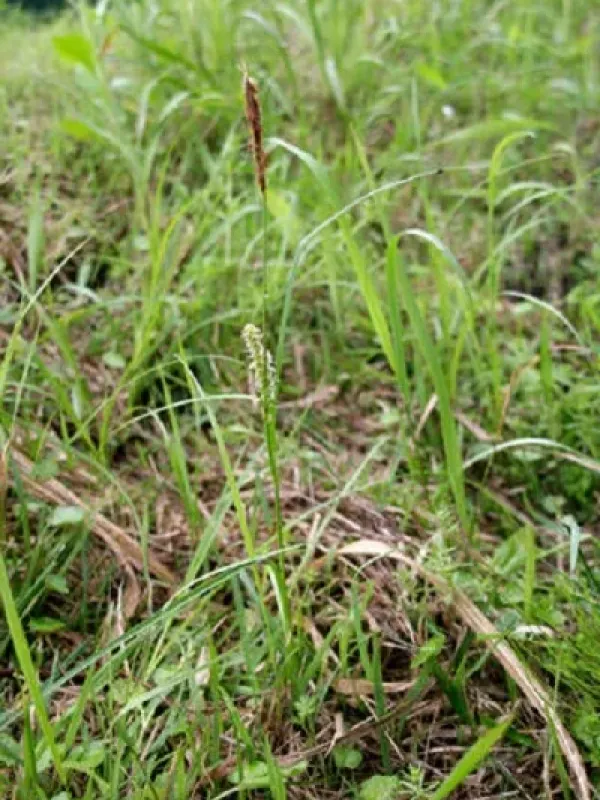
Description
Growing requirements
Wallich's Sedge (Carex wallichiana) is a perennial grass-like plant belonging to the Cyperaceae family. It is natively distributed across several Asian regions, where it typically colonizes wetlands, riverbanks, and areas with seasonal flooding.
The plant is characterized by a vigorous rhizomatous root system, which allows it to thrive in dense stands. Its foliage is notably tough and fibrous, an evolutionary adaptation that provides durability in aquatic and semi-aquatic habitats where it frequently grows.
Regarding soil and climate requirements, the species favors damp, nutrient-rich soils. It exhibits a high tolerance for waterlogged conditions, making it an ideal candidate for managing land that is typically too wet for traditional cereal or pasture crops.
The plant displays significant resilience to various temperature fluctuations. It remains dormant during harsh winters in colder zones and resumes rapid growth once soil temperatures rise, demonstrating excellent climatic adaptation.
In terms of agricultural management, the crop requires minimal intervention. Proper site selection and initial establishment are the most critical factors, as the species is essentially self-sustaining once the root network is fully developed in suitable moist conditions.
Harvesting
The agricultural utility of Wallich's Sedge is largely concentrated on forage production for livestock, particularly in areas where higher-quality grasses cannot survive. It serves as a reliable source of bulk biomass in marshy regions.
Harvesting strategies should prioritize timing to maximize nutritional value. Cutting should be performed before the plants reach maturity, as the fibers become increasingly lignified, which can reduce digestibility for cattle and other ruminants.
Beyond animal fodder, the species plays a crucial role in land stabilization and erosion control. Its dense root system binds the soil effectively, making it a valuable tool for ecological restoration of riverbanks and flood-prone agricultural plots.
Mechanical harvesting requires equipment designed for soft or wet ground conditions to prevent damage to the soil structure. Proper drying techniques are essential, especially given that the harvest often takes place in regions with high ambient humidity.
The long-term productivity of a sedge stand is high, with minimal need for re-seeding. Once established, the stand can provide consistent annual yields of biomass, contributing to the overall sustainability and land utility of moisture-retaining soil zones.