
Sheathed sedge
Carex vaginata
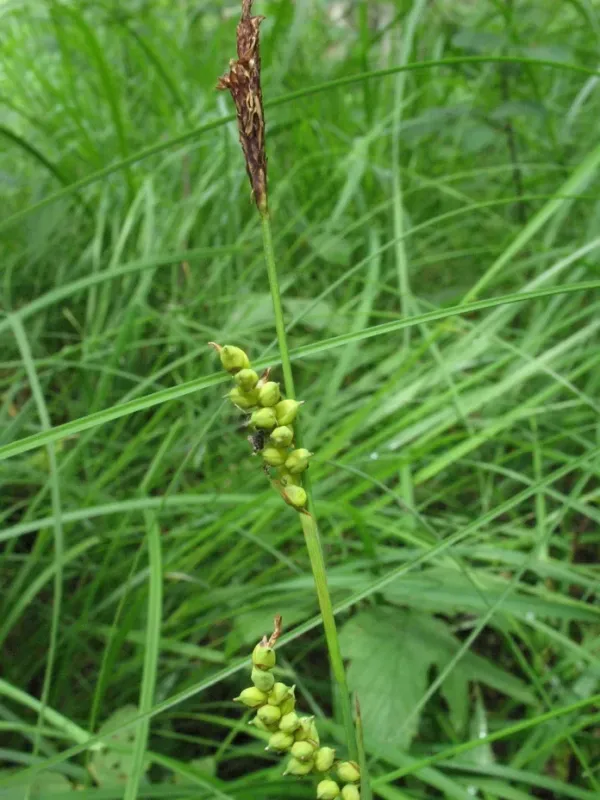
Description
Growing requirements
Sheathed sedge (Carex vaginata) is a perennial herbaceous plant belonging to the Cyperaceae family. It is characterized by long, creeping rhizomes that facilitate the formation of loose, resilient sod, allowing the species to spread effectively in diverse wetland environments.
The plant is native to northern temperate, boreal, and arctic regions. It typically thrives in moist to wet habitats, including mossy tundra, stream banks, damp meadows, and shaded coniferous forests. It exhibits a high degree of tolerance to acidic, nutrient-poor soil conditions where many other forage crops would fail to establish.
A distinctive botanical feature of Carex vaginata is the presence of enlarged, sheath-like bases on the stem leaves. These structures tightly wrap around the stem, providing mechanical protection and insulating the developing meristematic tissues from harsh environmental stressors like wind and freezing temperatures.
The cultural requirements for sheathed sedge focus on water management. It is a hydrophytic species that demands consistent soil moisture throughout the growing season. In cultivation, sites with high water tables or consistent moisture supply are essential for achieving optimal biomass development.
Adaptability is one of the key assets of this species. It can withstand long periods of soil freezing and can survive in areas with semi-shade, making it a robust candidate for ecological restoration projects or for enhancing degraded marshland territories.
Yield
In agricultural settings, sheathed sedge is primarily utilized as a forage resource for livestock, particularly in northern regions where it contributes to natural pasture and hay production. While sedges may have higher fiber content than conventional grasses, they remain a reliable source of nutrition when harvested at the right phenological stage.
The nutritional value is highest during the early vegetative phase, providing digestible proteins and carbohydrates for cattle and reindeer. As the plant progresses toward maturity, the stems become tougher, which is a consideration for timing hay harvests to maintain feed quality.
The yield of green biomass depends on the density of the stand and the moisture availability of the site. When managed within sustainable pasture rotation systems, this sedge can provide a consistent and renewable source of forage that withstands light to moderate grazing pressure.
Its deep root system plays a crucial role in soil stabilization, making the plant highly effective in preventing erosion on wet, vulnerable sites. This dual-purpose utility—as a forage crop and a soil-binding agent—increases its value for agricultural land reclamation.
Harvesting strategies should prioritize maintaining a sufficient leaf area to allow for rapid regrowth. Avoiding overgrazing is critical, as the resilience of the plant is tied to the health of its rhizomatous network, which stores the energy required for the next growing season.
Main diseases and pests
Sheathed sedge possesses a strong natural defense system, characterized by high levels of tannins and organic acids in its tissues. This chemical profile makes the species relatively resistant to common fungal diseases and pathogens that frequently impact cereal crops in moist conditions.
Pest pressures are generally low but can manifest during the flowering and seed-setting stages. Insects that target inflorescences can potentially reduce the success of natural regeneration, which is a concern for areas relying on self-seeding to maintain stand density.
The main threat to the sustainability of a sheathed sedge stand is mismanagement, specifically excessive trampling and overgrazing. Continuous pressure can damage the rhizomes and lead to the loss of sod integrity, allowing opportunistic weed species to colonize the exposed areas.
There are no significant reports of devastating diseases affecting this plant in agricultural use. Most issues that arise are typically linked to environmental stress, such as extreme desiccation or nutrient imbalances that weaken the plant's natural immune mechanisms.
To ensure long-term health, agricultural managers should monitor the stand for signs of compaction and implement rotational grazing patterns. These simple measures effectively balance the harvest of forage with the preservation of the plant's biological vigor and soil-binding functions.