
Greater pond sedge
Carex riparia
Description
Growing requirements
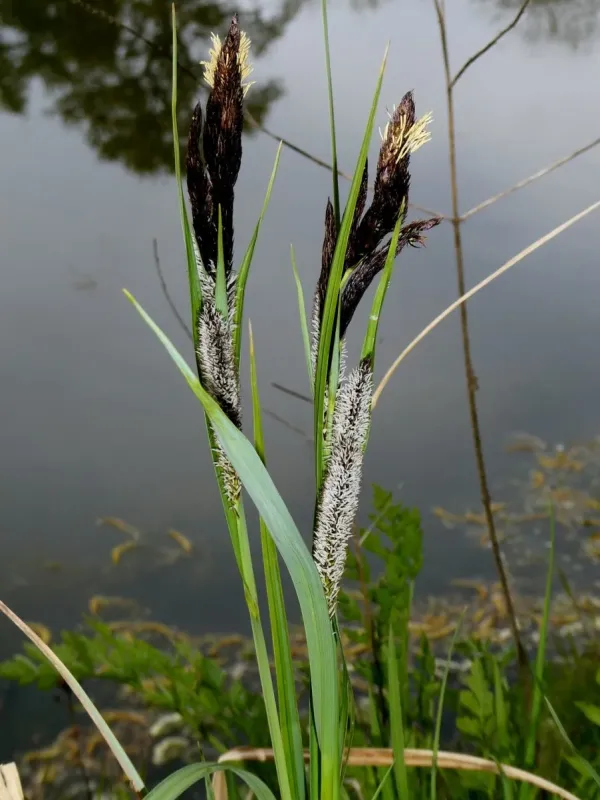
Greater pond sedge (Carex riparia) is a prominent member of the Cyperaceae family. It is a robust perennial herb widely distributed across Eurasia, typically colonizing wetland habitats, lake margins, and riverbanks.
The plant thrives in nutrient-rich, moist-to-wet soils. It is well-adapted to anaerobic conditions, frequently found in soils that are saturated for extended periods, making it an excellent candidate for wetland management projects.
Botanically, it is characterized by its long, creeping rhizomes, which allow it to form dense colonies. The stems are triangular, growing up to 150 cm in height, with bluish-green foliage that is both distinctive and hardy.
Regarding climate, this species demonstrates high resilience to cold temperatures and winter dormancy. It prefers full sun or partial shade, with the highest productivity observed in environments with stable water availability throughout the growing season.
In terms of propagation and establishment, it is primarily spread through rhizome division. Once established, it acts as a dominant cover plant, effectively outcompeting other species and stabilizing sensitive aquatic environments through its massive root mat.
Main diseases and pests
The greater pond sedge is known for its high natural resistance to environmental stress and common pathogens. However, in enclosed or stagnant conditions, leaf rust can occasionally manifest, impacting the aesthetic quality of the vegetation.
Pests are generally not a major concern; however, various leaf-feeding insects, including aphids or lepidopteran larvae, may cause minor damage during the peak summer months. These usually do not cause economic loss in non-forage settings.
Water-borne pathogens and root rots may occur if the soil substrate becomes highly polluted or improperly aerated. Maintaining good water quality is essential for the long-term health of the sedge population.
Invasive species or aggressive weeds can compete for space during the early establishment phase. Manual weeding or managing water levels is often sufficient to ensure the sedge successfully establishes its dominance in the area.
Because this plant is frequently used in ecological restoration, the focus is on maintaining biological balance rather than chemical control. Sustainable management practices ensure that the plant continues to function as a effective filter for the ecosystem.