
Pale sedge
Carex pallescens
Description
Growing requirements
Pale sedge (Carex pallescens) is a perennial herbaceous plant belonging to the Cyperaceae family. It is widely distributed across the temperate regions of Europe, Asia, and North America. This species typically thrives in moist meadows, open woodlands, and shrubby areas, exhibiting high adaptability to various environmental conditions.
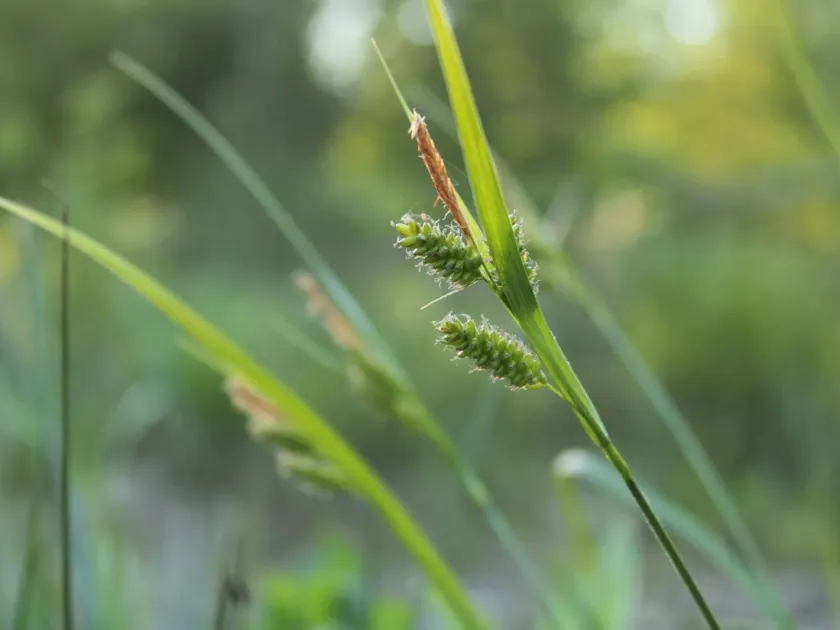
Botanically, this sedge forms dense tufts supported by short, creeping rhizomes. Its stems reach heights of 30 to 60 cm and are noted for their smooth texture. The leaves are characteristically pale green, which serves as a diagnostic feature. The inflorescence consists of a terminal male spike and several drooping female spikes, which are pendulous on slender stalks.
The climate requirements of Carex pallescens center on temperate conditions with moderate to high soil moisture. It is not strictly demanding regarding soil nutrient levels, though it performs best in loamy, well-drained but humid soils. It is highly winter-hardy and can tolerate partial shade, making it a robust component of meadow ecosystems.
Agricultural management for this plant is largely non-intensive. In practice, it is often managed as a spontaneous component of semi-natural grasslands and permanent pastures. Because of its resilience, it persists well under grazing pressure and adds to the structural diversity of the sward.
The primary economic use of pale sedge is as a fodder source for livestock. While it is rarely cultivated as a sole crop, it contributes to the biomass production in native hay meadows. It is most palatable during the early stages of vegetation, providing essential fiber for ruminant diets.
Main diseases and pests
Pale sedge is susceptible to common fungal pathogens affecting sedges, including various types of rust and smut. These diseases can impair plant vigor and reduce the yield of green biomass, particularly in locations with poor air circulation and excessive humidity.
Insect pests, including specific types of stem-boring larvae and seed-feeding beetles, may pose risks to the plant's reproduction and general development. Monitoring for these threats is recommended, especially in areas where sedge populations are managed for seed production or biodiversity conservation.