
Carex norvegica
Carex norvegica
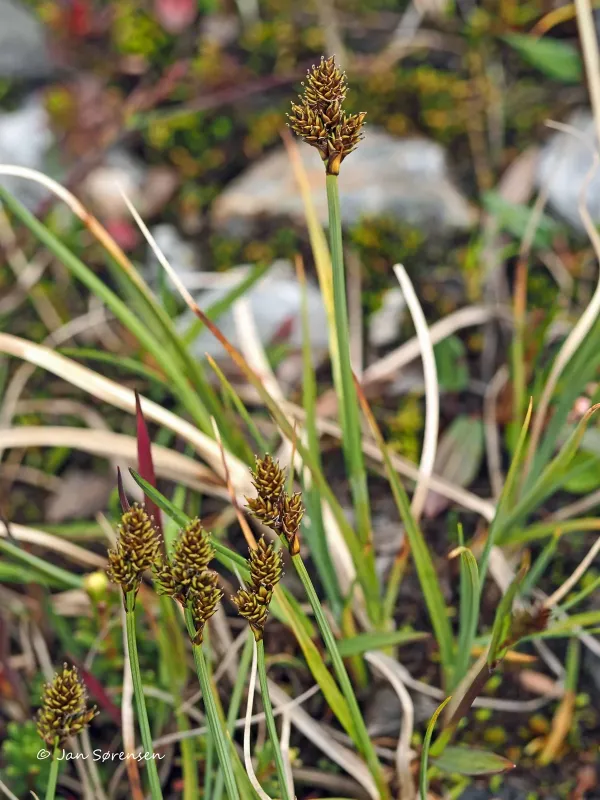
Description
Growing requirements
Carex norvegica, commonly known as the Norwegian sedge, is a perennial herb belonging to the Cyperaceae family. It is naturally adapted to cold climates, primarily inhabiting subarctic and alpine regions across the Northern Hemisphere.
Botanically, this species is characterized by its tufted growth habit and firm, narrow leaves. It typically thrives in habitats with high soil moisture, such as meadows, stream banks, and limestone-rich tundra, where it plays a critical role in soil stabilization.
The plant requires soils with high moisture content but demands good drainage to prevent root rot. It prefers neutral to alkaline soil pH levels, often showing the best development in regions where nutrient availability is sustained by slow decomposition of organic matter.
Regarding climate, Carex norvegica is highly frost-tolerant and requires cool, consistent growing temperatures. It is poorly adapted to heat stress, meaning that sustained high temperatures during the summer months can lead to physiological decline.
In terms of agricultural utilization, it is rarely grown as a monoculture but is highly valued as a significant component of natural northern pastures. It provides reliable forage for livestock in harsh conditions and helps in maintaining the integrity of fragile northern soil systems.
Main diseases and pests
The main threats to Carex norvegica are fungal diseases like rust and leaf spot, which often occur in areas with poor airflow and high humidity. These diseases weaken the plant and reduce its nutritional value for grazing animals.
Insect pests, including various aphids and leaf-feeding larvae, pose a constant threat to the vegetative mass. While these pests usually exist in natural equilibrium, outbreaks can cause significant damage in dense stands or under stressed environmental conditions.
Competition from invasive plant species is a major concern, as the relatively slow growth rate of the Norwegian sedge makes it vulnerable to displacement. Careful land management and controlled grazing are necessary to ensure the dominance of the sedge.
Human activities, such as overgrazing, directly contribute to the degradation of the root systems of this sedge. Excessive pressure on the soil surface destroys the dense turf, preventing the plant from performing its essential ecological and agricultural functions.
Effective control strategies involve rotating grazing plots to allow for natural recovery. Proper soil drainage and preventing soil compaction are also essential to maintain the health and vigor of the plant population against various biotic and abiotic threats.