
Carex melanostachya
Carex melanostachya
Description
Growing requirements
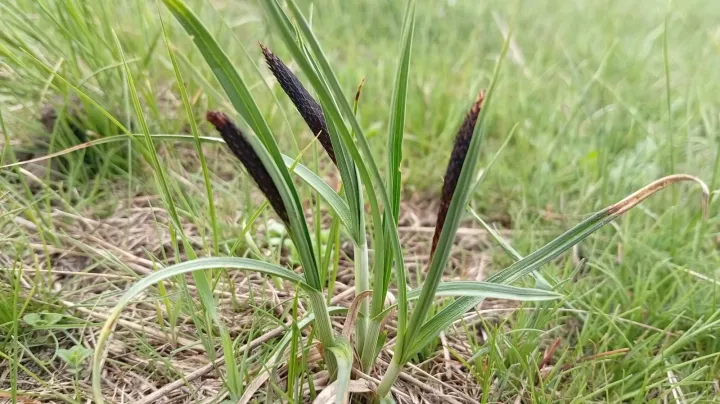
Carex melanostachya, known as black-spiked sedge, is a perennial plant belonging to the Cyperaceae family. It is characterized by its rhizomatous growth habit, forming loose mats of foliage. The plant's most distinct feature is its inflorescence, which consists of dark-brown to black-colored spikes, making it easily identifiable in its native habitat.
The species is primarily native to the steppe and forest-steppe zones of Eurasia. It thrives in diverse wetland environments, including riverbanks, salt marshes, and periodically flooded meadows. Its ability to tolerate saline conditions makes it a key species for land reclamation projects in areas where other forage crops struggle to survive.
Regarding environmental requirements, the plant prefers moist, nutrient-rich soils with moderate to high salinity levels. It is highly adaptive to fluctuating water tables, capable of withstanding spring inundation while remaining productive during drier summer months. It is typically found in neutral to slightly alkaline soil environments.
In terms of agricultural management, the primary use of Carex melanostachya is as a pasture plant, particularly in early spring when it provides a reliable source of green forage. Because the plant is quite hardy, it requires minimal input once established, though management of grazing density is crucial to prevent the exhaustion of rhizome energy reserves.
Beyond its forage value, the species is extensively used for bio-engineering. Its dense root system is highly effective at stabilizing riverbanks and embankments, reducing soil erosion. Furthermore, it plays a vital role in local ecosystems by improving water quality through nutrient absorption, contributing to healthier agro-ecosystems.
Main diseases and pests
The main pathological threat to Carex melanostachya is smut fungi, which targets the reproductive spikes and reduces overall biomass quality. Additionally, localized outbreaks of aphids can occur during periods of high humidity, impacting young tissue development, though these are rarely economically devastating to wild or naturalized stands.