
Carex heterostachya
Carex heterostachya
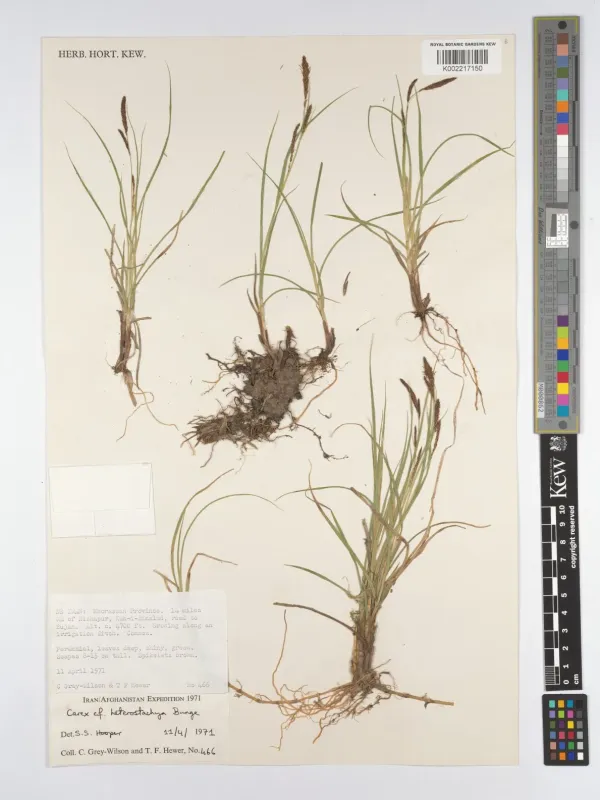
Description
Growing requirements
Carex heterostachya is a perennial herb belonging to the Cyperaceae family. Distributed across East Asia, this species is well-adapted to habitats characterized by high moisture content and specific hydrological conditions.
The plant exhibits a robust rhizomatous root system, allowing it to form dense mats or tussocks. Its linear leaves are tough and resilient, providing the plant with the ability to survive in environments that are subject to seasonal flooding or waterlogging.
Soil requirements for this species focus on high moisture-retention capacity. It performs optimally in organic-rich, damp substrates and is commonly found in riparian zones or marshy meadows where soil moisture is consistently available.
Regarding climate, the plant is highly hardy and cold-tolerant, enabling it to thrive in temperate regions with harsh winters. It is an ecologically valuable species capable of sustaining growth during periods of low temperature.
Agricultural and land management practices often utilize this sedge for soil stabilization and slope reinforcement, particularly in wetland reclamation projects where rapid ground cover establishment is necessary.
Main diseases and pests
This sedge species possesses a natural robustness against many common agricultural pathogens. Disease pressure is generally low, although fungal leaf spot diseases can occur under conditions of poor drainage or extreme humidity.
Insect pests such as sedge-specific aphids or stem-boring larvae may periodically infest the plants. However, the plant's structural toughness often limits the impact of these pests to minor aesthetic or physiological damage.
To mitigate health issues in sedge stands, managers should focus on maintaining natural hydrological rhythms and performing periodic removal of dead biomass to prevent the buildup of fungal spores.
Invasive weed competition is more likely to cause significant damage than pests. In managed areas, ensuring that the sedge maintains its competitive advantage through proper moisture levels is the primary cultural control method.
Chemical intervention is rarely required for this crop. Management strategies emphasize integrated cultural control, which relies on the plant's inherent adaptation to its specific environmental niche.