
String sedge
Carex chordorrhiza
Description
Growing requirements
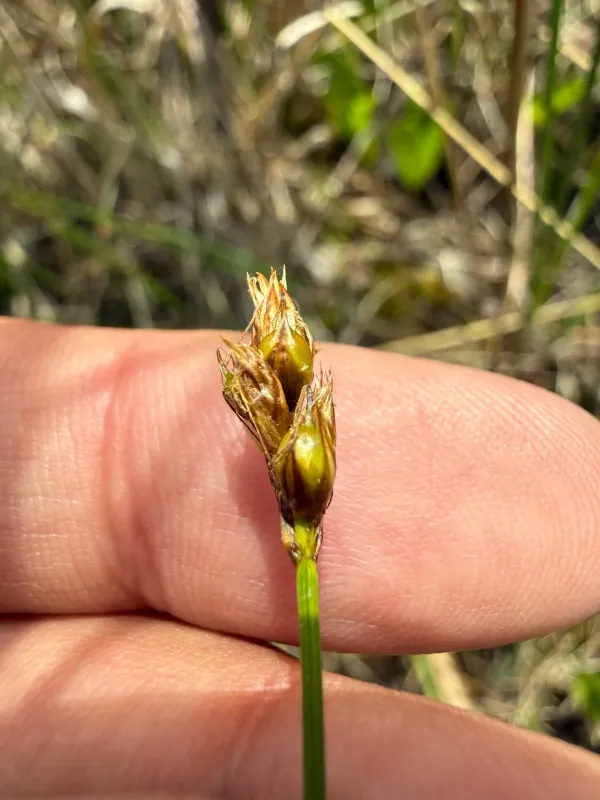
String sedge (Carex chordorrhiza) is a perennial herbaceous plant belonging to the Cyperaceae family. It is a characteristic species of peatlands and wetlands, known for its distinct morphology adapted to nutrient-poor aquatic environments.
The plant features long, creeping, above-ground shoots that act like runners or stolons. These shoots root at the nodes, forming loose mats that allow the sedge to colonize floating bog surfaces, often referred to as quaking bogs or fens.
The native range of the species spans the northern and temperate regions of Eurasia and North America. It is commonly found in oligotrophic to mesotrophic peatlands, where it thrives in water-saturated soils with high acidity.
String sedge requires full sun exposure and constant moisture to survive. It cannot tolerate drought or the drainage of its peatland habitat, which makes it a bioindicator for healthy, undisturbed boggy ecosystems.
While not a traditional agricultural crop, this species is essential for peatland conservation. It contributes significantly to the formation and stabilization of organic matter in wetlands, playing a critical role in the carbon cycle of these fragile habitats.
Main diseases and pests
The primary threat to string sedge populations is the large-scale drainage of peatlands for agricultural or industrial use. Any significant decrease in the water table destroys the habitat necessary for the plant’s survival.
The plant is susceptible to various fungal pathogens, particularly rusts (Puccinia species), which can damage the foliage in humid, stagnant air conditions. Such infections are typically found in dense, less ventilated bog patches.
Insects that specialize in feeding on wetland plants can sometimes infest patches of string sedge. Larvae of certain dipterans may damage the flower heads, potentially affecting the plant's ability to produce viable seeds.
Eutrophication caused by nutrient runoff from nearby cultivated lands acts as a major stressor. Excess nitrogen or phosphorus can alter the delicate chemical balance of the bog, allowing more aggressive plant species to displace the string sedge.
Climate-driven changes in temperature and rainfall patterns pose a long-term risk. Frequent cycles of frost and thaw, combined with unnatural hydrological fluctuations, can physically destroy the fragile stoloniferous network of this species.