
Caper bush
Capparis spinosa L.
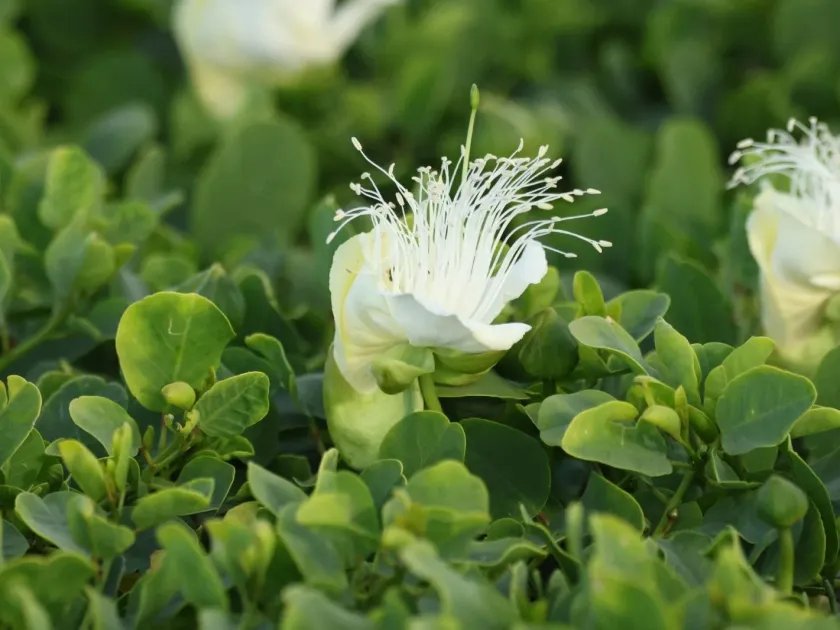
Description
Sowing dates
Sowing caper seeds is generally performed in early spring when temperatures remain consistently warm. Due to their hard seed coat, seeds often require scarification or a period of cold stratification to break dormancy and ensure uniform germination.
For commercial agricultural purposes, vegetative propagation via cuttings is preferred over seeds. Cuttings are taken from semi-hardwood shoots during the dormant season and rooted in specialized nurseries to ensure the genetic uniformity of the crop.
The optimal soil temperature for successful planting ranges from 20 to 25 degrees Celsius. Ensuring proper soil structure with excellent drainage is crucial to prevent the rotting of tender root systems in the early stages of growth.
Field planting involves maintaining a spacing of approximately 2 to 3 meters between rows, allowing for sufficient root development. As the plant matures, its deep taproot system becomes highly efficient at seeking water, making it a robust crop.
Proper orientation of rows to maximize sun exposure is a fundamental requirement during the initial setup of the plantation to encourage vigorous vegetative growth before the first flowering cycle begins.
Growing requirements
The caper bush (Capparis spinosa) is a perennial woody shrub belonging to the Capparaceae family. It is natively adapted to the Mediterranean and arid climates, characterized by its prostrate habit and thorny, ovate leaves.
Sunlight is the most critical environmental factor for the caper bush. It thrives under full sun exposure and is highly intolerant to shade, which significantly reduces the intensity of flower production during the peak season.
The crop is highly resistant to drought and can tolerate high salinity levels in the soil, making it suitable for growing in regions where other vegetables might struggle. It prefers rocky, calcareous, and well-aerated substrates.
Temperature management is key; while the plant is heat-tolerant, prolonged exposure to temperatures below -8 degrees Celsius can damage or kill the aerial parts. However, the root system is remarkably hardy and can often regrow after frost damage.
Proper site selection involves choosing locations with low moisture retention and minimal risk of waterlogging, as the plant is susceptible to fungal root issues if the soil remains saturated for extended periods.
Yield
Caper bushes typically reach economic maturity and become productive between three and five years of age. A well-maintained plantation can remain productive for several decades, proving to be a long-term agricultural investment.
Average yield per mature plant ranges between 2 to 5 kilograms of buds per season, depending on the cultivar, site fertility, and the intensity of the annual pruning regimen applied by the farmer.
The flowering season is remarkably long, extending from late spring through autumn, which allows for multiple harvest cycles. Productivity is stimulated by regular pruning, which encourages the growth of new floral-bearing shoots.
Yield management requires careful monitoring of the bud development stages. Since buds must be harvested before they open into flowers, labor-intensive manual picking is necessary throughout the entire summer and early autumn period.
Market returns are heavily dependent on the size of the buds collected; smaller, tighter, and more uniform buds consistently command higher prices in international spice and gourmet markets.
Main diseases and pests
Fungal diseases, most notably powdery mildew, represent a significant threat to caper plantations, especially in regions with unexpected rainfall or high humidity. Proper air circulation and pruning help mitigate these risks significantly.
Insect pests, including aphids and certain types of beetles, can cause localized damage to foliage and developing flower buds. Integrated pest management strategies are advised to keep populations under control without contaminating the product.
Weed control is essential in the first years of growth to prevent resource competition. Mechanical weeding is preferred, as deep tillage can disturb the fragile, spreading surface roots that capers often utilize for moisture absorption.
Monitoring for signs of root rot or crown rot is vital after winter dormancy. Any indication of plant decline should be met with immediate drainage improvements or localized treatment to prevent the spread to adjacent plants.
Due to the specific harvesting requirements for human consumption, chemical pesticide use must be strictly limited or avoided to comply with food safety standards for spice crops.
Harvesting
Harvesting capers is an intensive process that must be performed by hand. Workers must identify and select buds that are firm and closed; once a bud begins to open, it is no longer considered a prime commercial grade.
Once picked, the buds undergo a curing process. This typically involves air-drying in the shade, followed by preservation in salt, brine, or vinegar. This stage is necessary to neutralize the natural bitterness caused by glucocapparin.
The resulting cured product is a highly prized ingredient in Mediterranean cuisine, noted for its strong, pungent, and salty flavor profile, which adds depth to a variety of meat, fish, and pasta dishes.
The harvested buds are typically sorted into size categories ranging from "nonpareil" (the smallest and most expensive) to larger, more mature sizes, each catering to different culinary applications.
Beyond the flower buds, the small fruits (caper berries) are also harvested and pickled, offering an alternative product line that adds additional revenue for the agricultural enterprise.