
Waldstein's bellflower
Campanula waldsteiniana
Description
Growing requirements
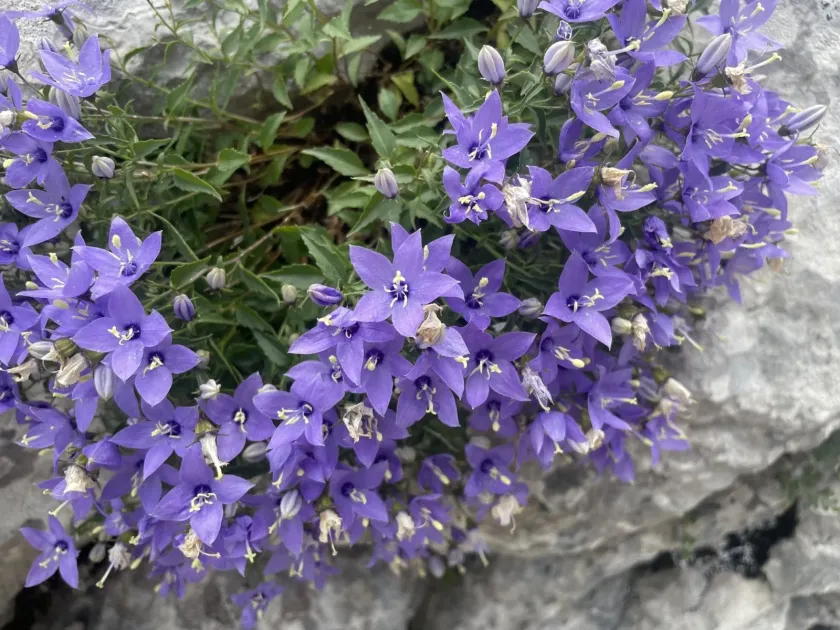
Waldstein's bellflower (Campanula waldsteiniana) belongs to the Campanulaceae family, naturally found in the limestone crevices of the Balkan mountains. This perennial herbaceous plant is highly prized in rock gardening for its compact habit and vibrant, star-shaped flowers.
The botanical structure consists of tight clusters of small, grayish-green leaves. Growing usually no taller than 15 cm, the plant develops a woody base, which allows it to thrive in nutrient-poor, mineral-rich soils typical of its native alpine habitat.
Cultivation requires a site with excellent drainage and full sun exposure. The soil should be slightly alkaline and gritty; regular garden soil must be amended with gravel or sharp sand to prevent moisture accumulation around the roots, which is the primary cause of failure.
In terms of agricultural management, the plant is relatively low-maintenance once established. It requires minimal fertilization, as excessive nutrients can cause lanky growth and reduce the plant's natural resistance to harsh environmental conditions.
Economically and aesthetically, this species is ideal for crevice plantings, troughs, and high-altitude theme gardens. Its ability to create dense, flowering mats makes it a valuable asset for landscaping projects focusing on water-wise and rockery designs.
Main diseases and pests
Root rot is the most significant disease threat to Waldstein's bellflower. It occurs primarily when the soil remains too wet for extended periods, encouraging fungal pathogens to attack the delicate roots and crowns of the plant.
Slugs and snails are the most common pests that feed on the soft, succulent leaves. These gastropods can decimate a young plant overnight, so it is necessary to implement protective measures such as copper tape or organic molluscicides during the growing season.
Aphid infestations may occur in warm weather, often clustering on the flower stalks. Controlling these pests is essential to maintain the structural integrity and blooming potential of the plants, which can be done using selective insecticidal soaps.
To prevent disease outbreaks, ensuring good airflow around the foliage is critical. Avoiding overhead watering and keeping the crown dry by using a mulch of decorative stone chips are effective cultural practices for maintaining plant health.
Monitoring the plants throughout the spring and early summer is vital. Early identification of stress or pest activity allows for quick intervention, ensuring that the Campanula waldsteiniana remains a healthy and permanent fixture in the garden landscape.