
Shield bellflower
Campanula scutellata
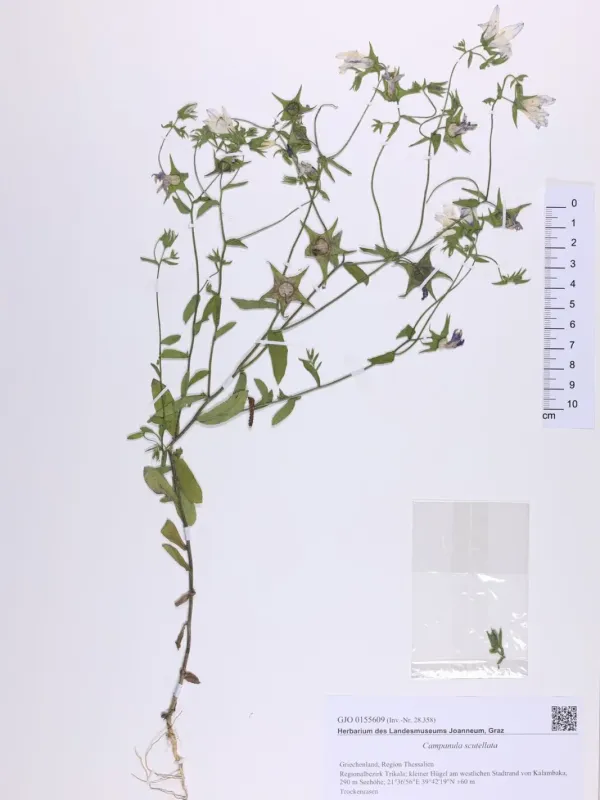
Description
Sowing dates
Sowing of Campanula scutellata is typically performed in early spring or late autumn, depending on the specific climatic zone and local conditions.
Seeds are extremely small and should be scattered over the surface of moist, well-prepared soil without covering them too deeply with substrate.
Using a greenhouse for early starting allows for faster growth and development before transplanting the seedlings into the permanent flower bed.
Maintaining consistent moisture is critical during the germination phase to ensure a high success rate and even distribution of young plants.
After reaching a height of several centimeters, plants should be spaced correctly to allow for proper air circulation and future root expansion.
Growing requirements
The Shield bellflower is a member of the Campanulaceae family and is known for its distinct cluster of flowers arranged in a corymb-like structure.
It thrives in well-drained, nutrient-rich soils and generally prefers locations that provide full sun exposure for the majority of the day.
Adequate drainage is essential, as the species is highly susceptible to root rot if water is allowed to accumulate around the root ball.
Regular maintenance including weeding and soil aeration helps keep the plants vigorous and reduces competition with invasive wild grasses.
The plant demonstrates good adaptability to temperate climates but requires protection from excessive heat and prolonged drought periods.
Main diseases and pests
Fungal diseases, particularly powdery mildew, are common during periods of high humidity and insufficient air movement in the planting site.
Slugs and snails are the primary pests that damage the foliage, often appearing in large numbers during damp spring and summer weather.
Aphid infestations can weaken the plant by feeding on the sap, potentially leading to stunted flower development and foliage discoloration.
Root rot is often a consequence of poor soil drainage and excessive irrigation, making soil preparation the most vital step in disease prevention.
Effective management strategies involve a combination of chemical control, manual removal of pests, and proper cultural practices for sanitation.