
Callisia navicularis
Callisia navicularis
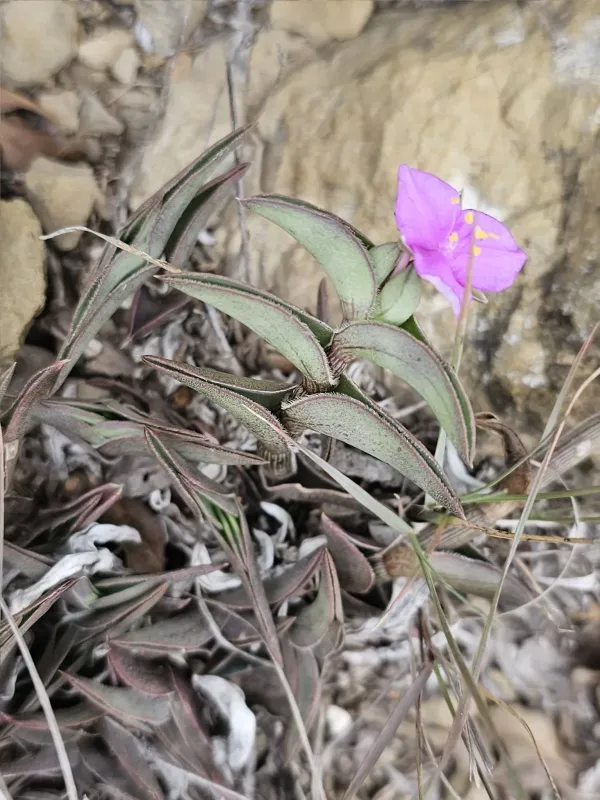
Description
Growing requirements
Callisia navicularis is a perennial succulent plant belonging to the Commelinaceae family. Native to Mexico, it naturally thrives in rocky, arid environments where it has adapted to survive on minimal soil moisture and intermittent water supply.
The plant is characterized by its creeping or trailing stems, densely covered with boat-shaped (navicular) leaves. These leaves have a leathery texture and often display deep purple or reddish hues when exposed to bright light conditions, which is essential for aesthetic value.
For optimal growth, this culture requires bright, indirect light. Insufficient lighting causes the stems to etiolate, making them fragile and elongated, while the vibrant colors of the leaves fade into a dull green, significantly reducing the plant's health.
The soil must be porous and well-draining to mimic the plant's native rocky habitat. A standard succulent potting mix, amended with perlite or coarse sand, ensures the necessary air exchange and prevents the roots from sitting in standing water.
Temperature management is crucial: during the active growing season, a range of +20...+25°C is ideal. During winter dormancy, moving the plants to a cooler environment (+12...+15°C) and reducing water intake will help prevent rot and encourage future blooms.
Main diseases and pests
Common pests affecting Callisia navicularis include mealybugs and spider mites. Mealybugs tend to congregate in the axils of the leaves, where their cotton-like secretions can hide, eventually stunting the growth of new shoots.
Spider mites are prevalent in environments with low humidity. They feed on plant sap, leaving behind tiny yellow spots on the leaves and a fine, silken webbing that can quickly cover the stems if the infestation is left untreated.
Root rot is the most serious threat, usually caused by overwatering or poor drainage. Once root tissue begins to decay, the infection can rapidly spread upward into the stems, making salvage difficult without immediate intervention.
Integrated pest management involves regular visual inspections of the stems and leaf bases. If pests are detected, systemic insecticides or horticultural oils should be applied according to label instructions to eliminate the colony.
Maintaining proper hygiene and good airflow around the plants significantly reduces the risk of fungal outbreaks. Always ensure the top layer of soil dries out completely before performing the next watering to maintain healthy root systems.