
Calibrachoa thymifolia
Calibrachoa thymifolia
Description
Growing requirements
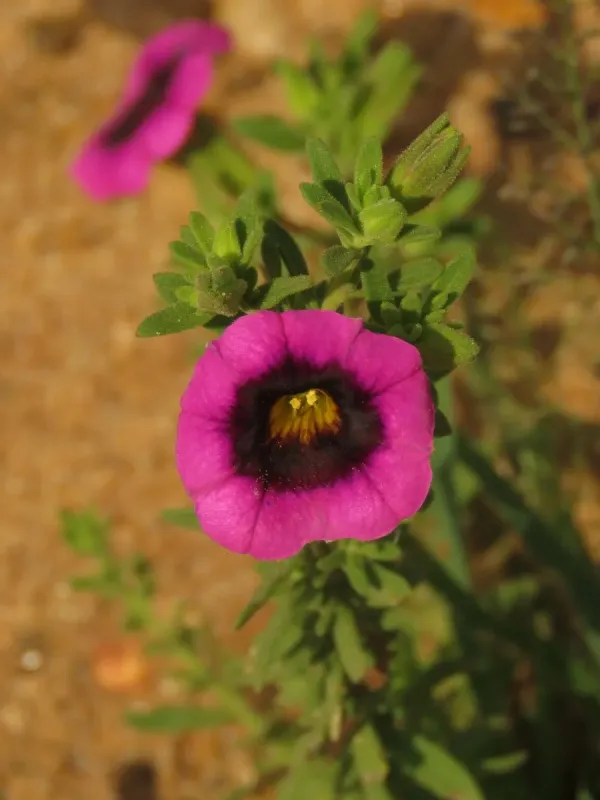
Calibrachoa thymifolia is an ornamental herbaceous species belonging to the Solanaceae family. Originating from South America, this plant is well-adapted to rocky and well-drained environments. It is widely recognized for its trailing growth habit and compact, thyme-like foliage.
Sunlight is the most crucial environmental factor for this species. It requires full sun exposure to maintain its dense structure and promote vigorous flowering. Inadequate light levels lead to etiolated stems and significantly reduce the quality of the display.
The soil must be highly porous and well-aerated to ensure healthy root development. A substrate based on peat moss with added perlite or vermiculite is recommended to provide optimal drainage. The pH level should be maintained strictly between 5.5 and 6.0 to prevent nutrient lock-out.
Thermal requirements for Calibrachoa thymifolia are defined by its tropical origin. It is highly sensitive to cold temperatures and cannot survive frost. Therefore, in cooler climates, it is cultivated primarily in containers, hanging baskets, or as an annual bedding plant.
Water management is critical to avoid root rot. Irrigation should be consistent but allow for the top layer of the substrate to dry out between applications. Proper drainage systems are essential to prevent the accumulation of moisture, which is lethal to the root system.
Main diseases and pests
Root rot, primarily caused by Pythium and Phytophthora, is the most common and destructive threat to the species. These pathogens thrive in waterlogged soils, making proper irrigation practices the first line of defense for the plant.
Powdery mildew is a frequent fungal infection affecting the foliage during periods of high humidity and poor ventilation. It manifests as white, dusty patches, which can be mitigated by ensuring adequate spacing and air circulation between plants.
Pests such as spider mites, whiteflies, and aphids are common in hot and dry microclimates. They feed on plant sap, weakening the crop and often serving as vectors for secondary viral infections that can stunt growth.
Iron deficiency chlorosis is a prevalent physiological disorder in this species, often triggered by an excessively high soil pH. The condition results in interveinal yellowing of leaves, which requires the application of chelated iron to correct.
Integrated pest management (IPM) is highly recommended for commercial production. Regular monitoring of the foliage and substrate health, combined with timely chemical or biological interventions, ensures the longevity and quality of the crop.