
Prairie sandreed
Calamovilfa longifolia
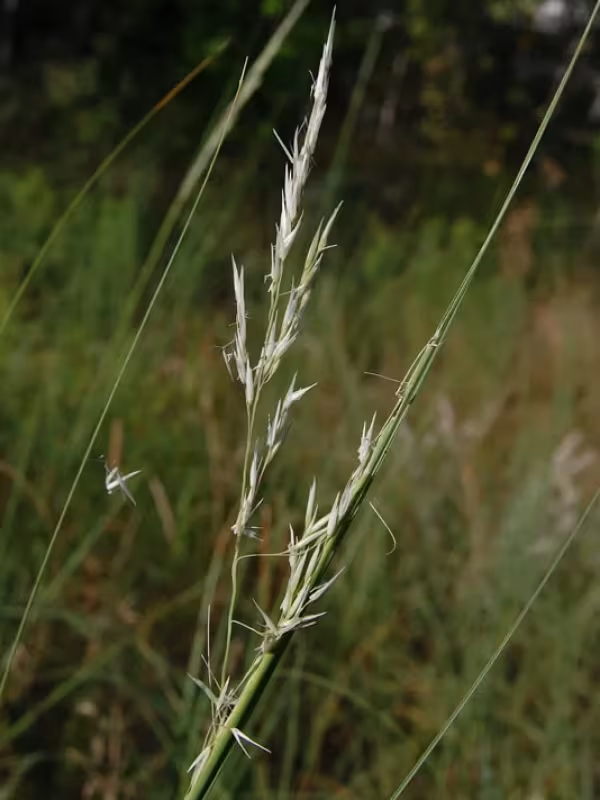
Description
Sowing dates
The planting of Calamovilfa longifolia, commonly known as Prairie sandreed, is best executed in early spring to utilize residual soil moisture effectively.
Seedbed preparation should involve creating a firm, weed-free environment to facilitate germination, as the seeds are relatively small and need consistent contact with the soil.
In large-scale reclamation projects, seeds are drilled into the soil, while vegetative propagation using rhizome segments remains a viable alternative for smaller plots.
Proper depth control is critical; placing seeds too deep will result in poor emergence, while shallow sowing may leave them susceptible to wind erosion.
Initial establishment is notably slow, requiring growers to exercise patience and protect the young plants from competition during the first full growing season.
Growing requirements
Prairie sandreed is a hardy, long-lived perennial grass belonging to the Poaceae family, native to the Great Plains of North America.
It thrives in sandy, nutrient-poor soils where moisture availability is limited, making it an essential species for managing arid ecosystems.
The plant requires full sun exposure for optimal health and vigor; shade-dominated environments will significantly stunt its growth and reduce its rhizome expansion.
Its deep-reaching root system is its primary adaptation, allowing it to anchor itself firmly into unstable sandy dunes and rocky substrates.
The species demonstrates excellent winter hardiness and is highly drought-tolerant, capable of surviving through intense seasonal temperature fluctuations.
Yield
While not a traditional cash crop, the economic value of Prairie sandreed lies in its ability to generate biomass for erosion control and environmental restoration.
When managed as a forage crop, it provides a consistent supply of hay, although its nutritional quality is best when harvested prior to full maturity.
Yield metrics for this species are often measured by the density of the sod formed rather than the total weight of the biomass collected per hectare.
Under favorable growing conditions, mature stands can be highly productive, offering significant surface cover that protects soil from wind and water erosion.
Strategic management of grazing, if used for forage, is essential to prevent overgrazing, which could jeopardize the structural integrity of the plant's root system.
Main diseases and pests
Prairie sandreed is remarkably resilient to pests and diseases, often outperforming introduced species in natural habitat conditions.
The primary threats to young stands are invasive weeds that can outcompete the slow-growing seedlings for nutrients and sunlight in early spring.
Fungal pathogens may occasionally occur if the drainage is insufficient, leading to crown or root stress that can weaken the plant over time.
Damage from soil-dwelling insects is relatively rare but can occur in monoculture settings if the rotation cycle is not properly managed.
Maintaining a healthy, vigorous population through appropriate site selection is the best defense against potential biological threats to this grass.