
Sea rocket
Cakile maritima
Description
Growing requirements
Sea rocket (Cakile maritima) is an annual plant belonging to the Brassicaceae family, well-adapted to life in extreme coastal environments. Its primary habitat includes sand dunes and sandy beaches along maritime zones.
The plant exhibits remarkable tolerance to high levels of salinity, making it an excellent halophyte. It features fleshy leaves designed for water storage, allowing it to survive periods of intense drought in poor, well-drained sandy soils.
In terms of agricultural requirements, sea rocket thrives in full sunlight. It is essential to maintain high levels of soil aeration, as root health is critical for this species. It does not require fertilization but benefits from a stable substrate to prevent wind erosion.
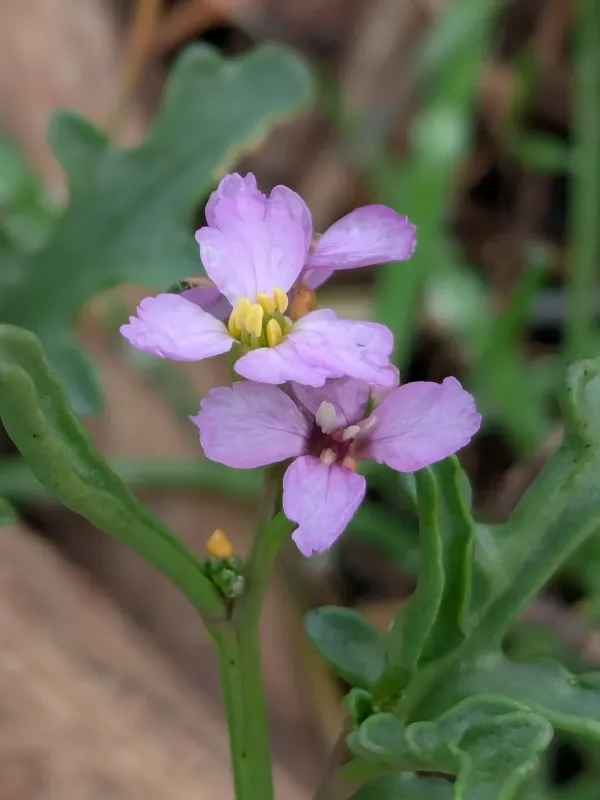
Botanically, it is recognized by its lavender-to-white flowers and silique-type fruits. These structures allow the seeds to be dispersed by seawater, ensuring the colonization of new coastal areas over vast distances.
While often considered a wild herb, there is growing interest in its culinary use. The leaves possess a pungent, mustard-like flavor, and the oil content in the seeds is being researched for industrial applications in areas with high soil salinity.
Main diseases and pests
The primary diseases affecting sea rocket are typical of the cruciferous family. Clubroot (Plasmodiophora brassicae) can severely impact development, especially if plants are grown in areas with poor drainage and excessive moisture.
Insect pests, particularly flea beetles, pose a major threat during the seedling stage. These insects feed on the succulent leaves, significantly weakening the plant's capacity to accumulate the salts required for its survival.
Fungal pathogens such as powdery mildew can spread quickly under conditions of high humidity. This is particularly problematic if the planting density is too high, leading to limited airflow around the vegetation.
Aphids are frequent visitors during the flowering season. They tend to concentrate on the floral stalks, which can lead to stunted growth and reduced seed yield if infestations are left unmanaged in a cultivation setting.
Generally, wild populations maintain high resilience due to the harsh conditions of their natural habitat, which suppress many pathogens. However, agricultural cultivation requires constant monitoring and integrated pest management practices.