
Sea rocket
Cakile lanceolata
Description
Sowing dates
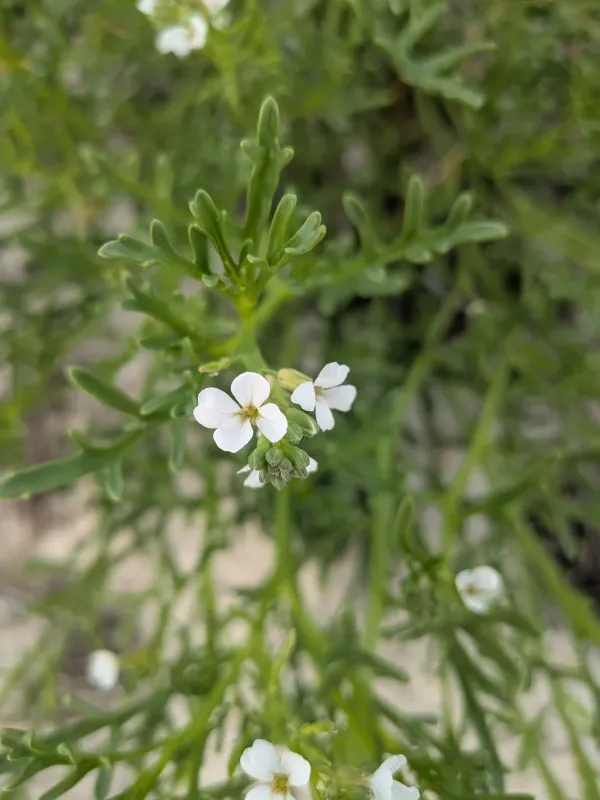
Sea rocket, scientifically known as Cakile lanceolata, is a member of the Brassicaceae family that has adapted specifically to coastal and saline environments.
In its native habitat, the plant spreads via seed pods that are highly buoyant, allowing the ocean tides to distribute the seeds across long distances.
For agricultural purposes, seeds should be sown in well-drained, sandy substrates that replicate the natural conditions the plant requires for successful germination.
The optimal sowing depth is quite shallow, typically 1-2 centimeters, ensuring that the seeds receive enough light and moisture to sprout quickly in open soil.
Early spring is the preferred time for sowing, as the rising temperatures help trigger the growth cycle after the winter dormancy period is over.
Growing requirements
The crop requires full sun exposure and performs poorly in shaded areas, making it essential to choose sites with maximum daily sunlight duration.
As a known halophyte, this plant is exceptionally tolerant to salt, making it a viable candidate for land reclamation in coastal or highly saline agricultural zones.
Soil quality should lean towards sandy or loamy-sand textures, as the plant cannot tolerate waterlogging or heavy, compacted soil types that suffocate roots.
This species exhibits strong drought resistance, enabling it to thrive in arid coastal conditions where traditional crops would often fail due to water stress.
While the plant is hardy, providing a balanced nutrient profile during the early vegetative stages can significantly boost biomass production in agricultural plots.
Yield
The overall yield of sea rocket depends largely on environmental conditions, including light intensity and the availability of soil nutrients during peak growth.
The biomass produced by this crop is rich in phytochemicals and specific oils, which hold potential interest for industrial and chemical applications.
In a controlled cultivation setting, sea rocket can produce significant amounts of leafy material, which may be useful as a green manure for soil conditioning.
The total seed production is determined by the length of the growing season and the success of pollination, which is typically managed by local insect populations.
When managed properly, the crop can cover large areas effectively, preventing erosion and suppressing weed competition through its dense growth habit.
Main diseases and pests
Sea rocket is susceptible to common pests associated with the Brassicaceae family, such as flea beetles, which can cause significant damage to young seedlings.
High humidity levels during the growing season can promote fungal diseases like powdery mildew, necessitating careful moisture management and adequate air circulation.
Leaf-eating insects and certain types of caterpillars can also impact the plant's health, requiring regular scouting to prevent widespread infestations.
Crop rotation remains the most effective defense strategy against soil-borne pathogens and pests that specifically target brassica-related plants.
- Implement regular crop inspection routines.
- Maintain proper spacing between plants to reduce disease spread.
- Use integrated pest management to minimize reliance on synthetic chemicals.
Harvesting
Harvesting should be timed carefully to ensure the seed pods have reached full maturity but have not yet shattered, which usually occurs when they turn brown.
Manual or mechanical harvesting must be performed with precision to avoid unnecessary seed loss resulting from the fragile nature of the ripened pods.
Post-harvest processing involves drying the seeds in a well-ventilated area to reach an optimal moisture content, which is crucial for long-term storage.
Proper cleaning of the seed lot is necessary to remove debris and pod fragments, ensuring a high-quality product ready for further distribution or processing.
Storage should be handled in cool, dry conditions to protect the volatile oils and maintain the viability of the seeds until they are needed for sowing or sale.