
Indian plantain
Cacalia tuberosa
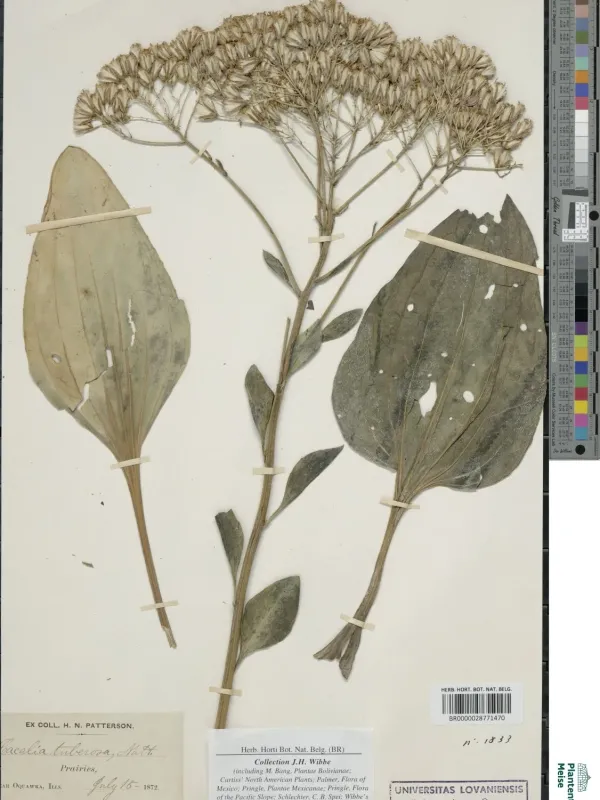
Description
Sowing dates
Cacalia tuberosa, commonly known as Indian plantain, is a perennial flowering plant in the Asteraceae family. Its propagation is primarily achieved through seeds, which require a period of stratification to break dormancy and ensure high germination rates.
For successful planting, seeds should be sown in late autumn to benefit from winter cold or pre-stratified artificially in a refrigerator before spring sowing. The seeds should be lightly covered with soil, as they need shallow planting depths to emerge effectively.
Seedlings develop slowly, necessitating careful moisture management and protection from competitive weeds during the first weeks. Providing a sheltered environment or using propagation trays can significantly improve early survival rates for this delicate species.
The recommended spacing for established plants is approximately 40 to 50 centimeters apart. This spacing allows each individual plant to develop its tuberous root system without excessive competition for soil nutrients and water resources.
Vegetative division of the tuberous roots is a practical alternative to seed propagation for rapid crop establishment. This process is ideally carried out during the dormant phase, ensuring that division does not stress the parent plants during active growth.
Growing requirements
Indian plantain thrives in well-drained, fertile soils rich in organic matter. While it prefers neutral to slightly alkaline soil pH, the most critical factor for success is ensuring that the soil structure allows for good water penetration without waterlogging.
This crop prefers full sun exposure to maintain vigorous growth and optimize its photosynthetic capacity. Partial shade is acceptable in extremely hot climates, though extended periods of low light may result in leggy plants and reduced tuber yields.
Consistent moisture is required throughout the growing season, particularly during the establishment phase and the mid-summer development period. However, irrigation must be balanced carefully to avoid root rot, which is a major risk in heavy clay soils.
Fertilization with balanced organic compost supports the development of healthy foliage and sturdy root systems. Nitrogen-rich applications should be used moderately, focusing instead on long-term soil improvement through sustainable agricultural practices.
Hardiness is generally sufficient for temperate climates, but in regions with harsh winters, mulching with organic material like straw or wood chips helps stabilize soil temperatures and prevents freezing damage to the dormant tuberous roots.
Main diseases and pests
Pests such as aphids and leaf-eating caterpillars are common challenges when cultivating Cacalia tuberosa. Early detection is essential, and physical removal or organic insecticidal soap can be used to manage infestations before they spread.
Fungal diseases, including powdery mildew, frequently occur in crowded plantings or areas with poor air circulation. Proper spacing and regular thinning of foliage help reduce the humidity around the base of the plant, thereby inhibiting fungal spore growth.
Root rot remains the primary threat to the tubers, often triggered by excessive soil moisture or poor drainage. Monitoring soil moisture levels and ensuring that irrigation cycles allow for the soil to dry out slightly are critical preventive strategies.
Rust and leaf spot diseases may appear during wet summer months, negatively affecting the plant's overall health and tuber development. Removing infected leaves and maintaining clean garden practices are fundamental to controlling these pathogens.
Integrated pest management, which emphasizes regular monitoring and the use of resistant varieties, is the most effective approach. By maintaining a clean environment and healthy soil, farmers can significantly reduce the need for synthetic chemical treatments.
Harvesting
Harvesting the tubers is best performed in late autumn, once the foliage has naturally senesced and turned brown. This allows the plant to transfer all remaining energy into the tubers, ensuring better nutritional value and storage potential.
To extract the tubers, growers should carefully loosen the soil with digging forks, taking care not to pierce or break the roots. Any physical injury to the tuber during harvest increases the risk of decay and infection during the storage phase.
After collection, the tubers should be cleaned of loose dirt and left in a shaded, well-ventilated area to cure for a few days. This curing process helps heal small wounds and prevents moisture loss during the long-term storage period.
Storage should be conducted in cool, dark environments with high humidity levels, often using peat or moist sand as packing material. Consistent temperatures around 2 to 5 degrees Celsius are ideal for keeping the tubers dormant until the next planting season.
Regular inspection of stored tubers is necessary to catch any signs of rotting. By removing compromised tubers early, farmers can preserve the rest of the crop for future planting or processing, ensuring the sustainability of the agricultural operation.