
White Lippia
Lippia alba (Mill.) N. E. Br. ex Britton & P. Wilson
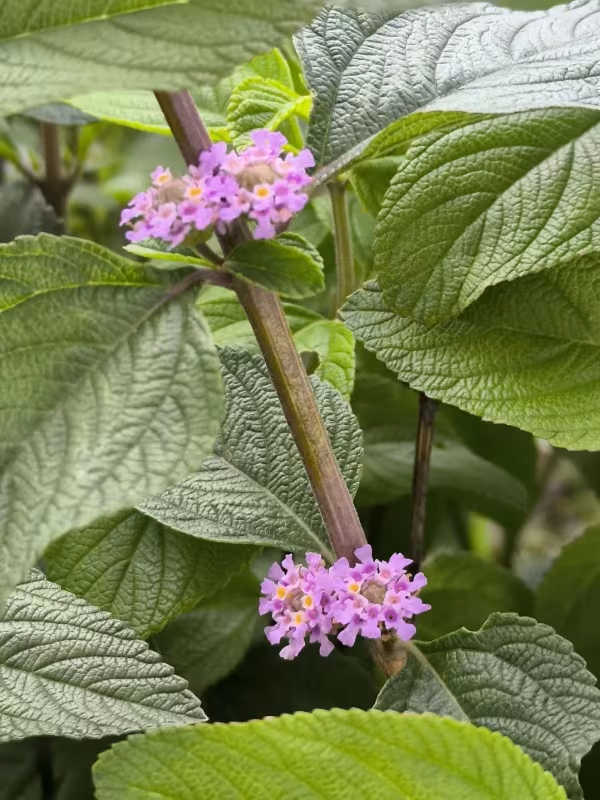
Description
Sowing dates
Lippia alba, known as white lippia, is a perennial subshrub belonging to the Verbenaceae family, highly valued for its aromatic essential oils.
In agricultural practice, the crop is primarily propagated through stem cuttings rather than seeds due to the variability in seed viability and germination rates.
Cuttings should be taken from healthy mother plants and rooted in a controlled greenhouse environment with high humidity and temperatures around 25 degrees Celsius.
Transplanting into the field is carried out once the risk of frost has passed, as the plant is sensitive to cold stress during its early establishment phase.
The spacing between rows should be maintained at 60–80 cm, with plants spaced 40 cm apart to facilitate mechanical weeding and ensure optimal plant vigor.
Growing requirements
White lippia thrives in full sun exposure, which is essential for maximizing the concentration of phytochemicals and essential oils in the plant's tissues.
The species requires well-drained, fertile soil with a slightly acidic to neutral pH; waterlogging is the primary cause of plant loss in commercial production.
Irrigation must be consistent throughout the growing season to prevent drought stress, which can lead to early flowering and reduced vegetative growth.
While the plant is hardy in tropical regions, it requires temperatures between 18 and 30 degrees Celsius for optimal biomass production.
Soil nutrient management should focus on balanced N-P-K applications, with increased nitrogen during the vegetative phase to boost foliage production.
Yield
The yield of Lippia alba is highly dependent on harvest frequency; in subtropical climates, multiple harvests per year are standard practice for commercial growers.
The main economic product is the essential oil, which is extracted via steam distillation of the aerial parts, primarily the leaves and tender stems.
Fresh biomass yields can range from 10 to 15 metric tons per hectare, depending on irrigation efficiency and soil fertility management.
Variations in yield and chemical composition are often linked to specific chemotypes, making the selection of high-oil-producing cultivars crucial for commercial success.
Plants generally remain productive for 3 to 5 years, after which the plantation should be replanted to maintain high-quality essential oil output.
Main diseases and pests
White lippia is relatively resistant to major pests, but it can be susceptible to fungal diseases such as root rot in poorly drained or overly dense plantations.
Powdery mildew may occur under conditions of high humidity and poor air circulation, necessitating thinning of the canopy and improving field ventilation.
Spider mites are the most common insect pests, particularly during hot and dry periods; they typically feed on the undersides of the leaves.
Integrated pest management strategies, focusing on biological controls, are recommended to avoid chemical residues in the aromatic extract.
- Soil aeration through regular mechanical cultivation.
- Prompt removal of infected or necrotic plant material.
- Monitoring soil moisture levels to avoid anaerobic conditions.
Harvesting
Harvesting is ideally conducted during the full bloom stage, as this coincides with the peak accumulation of essential oils within the plant cells.
Mechanical harvesting involves cutting the plants at approximately 15 cm above ground level to protect the crown and encourage rapid regrowth.
Freshly harvested material must be processed immediately to prevent heating and the degradation of volatile aromatic compounds during transport and storage.
If dried product is desired, shade drying is preferred over direct sun exposure to maintain the green color and the integrity of the essential oil composition.
Final storage of the dried herb or essential oil should occur in airtight containers, kept in a cool, dark environment to ensure long-term shelf stability.