
Burchardia umbellata
Burchardia umbellata
Description
Growing requirements
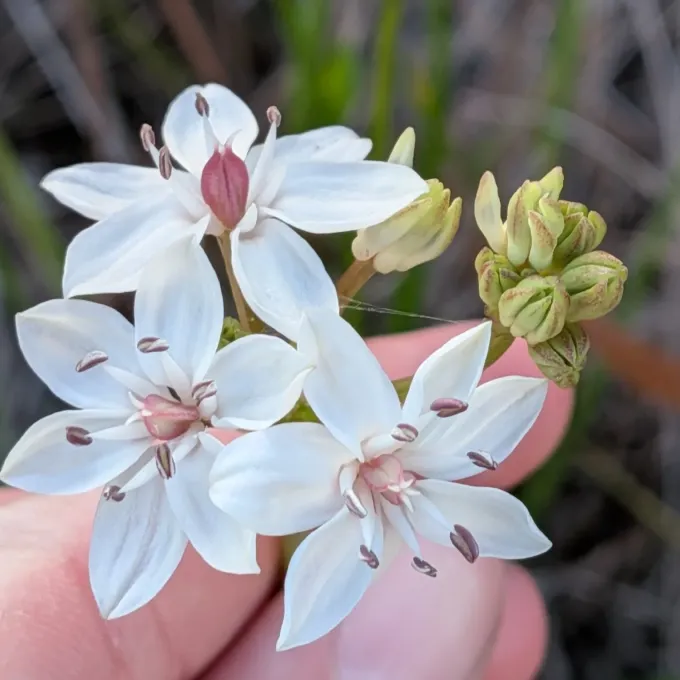
Burchardia umbellata, commonly known as milkmaids, is a perennial herbaceous plant belonging to the Colchicaceae family. It is a native species to Australia, where it thrives in diverse habitats ranging from coastal plains to open forests.
The plant features a small, subterranean bulb that acts as a survival organ, allowing it to remain dormant during dry seasons. The foliage consists of narrow, grass-like leaves that emerge with the first rains, providing the energy necessary for the plant to bloom in spring.
For successful growth, Burchardia umbellata requires well-drained, sandy or gravelly soil. It is highly sensitive to moisture accumulation; therefore, poor drainage often leads to bulb rot, which is the primary cause of failure in cultivation attempts.
The climate requirements mimic Mediterranean conditions, characterized by cool, wet winters and dry, warm springs. Optimal sunlight exposure is critical, as these plants require high irradiance to produce robust flowering stalks and maintain their physiological cycle.
Economically, the plant is primarily cultivated by specialized nurseries and enthusiasts of Australian native flora. Its aesthetic appeal, derived from clusters of white-to-pink star-shaped flowers, makes it a valuable addition to rock gardens or pots, provided the specific dormancy requirements are met.
Main diseases and pests
Root rot caused by Phytophthora and other soil-borne fungi represents the most significant threat to the survival of these bulbs. These pathogens thrive in conditions where soil drainage is inadequate or moisture levels are consistently high.
Pests such as bulb mites and various soil-dwelling larvae can significantly damage the base of the plant. Regular inspection of the bulb tissue during storage or dormancy is necessary to identify early signs of infestation and apply control measures.
Weeds pose a severe threat during the early development stages. Due to the relatively slow growth rate of the species, competition for nutrients and sunlight with aggressive vegetation can easily lead to the suppression of the Burchardia colony.
Rodents are opportunistic feeders that may consume the stored starch within the bulbs during the dormancy period. The use of hardware cloth or secure containers is an essential component of the cultivation strategy to prevent significant losses.
Finally, nutritional imbalances, particularly excessive nitrogen applications, can lead to soft, succulent growth that is more susceptible to both environmental stress and secondary infections. A balanced approach using phosphorus-rich fertilizers is recommended for long-term health.