
Bulbine natalensis
Bulbine natalensis
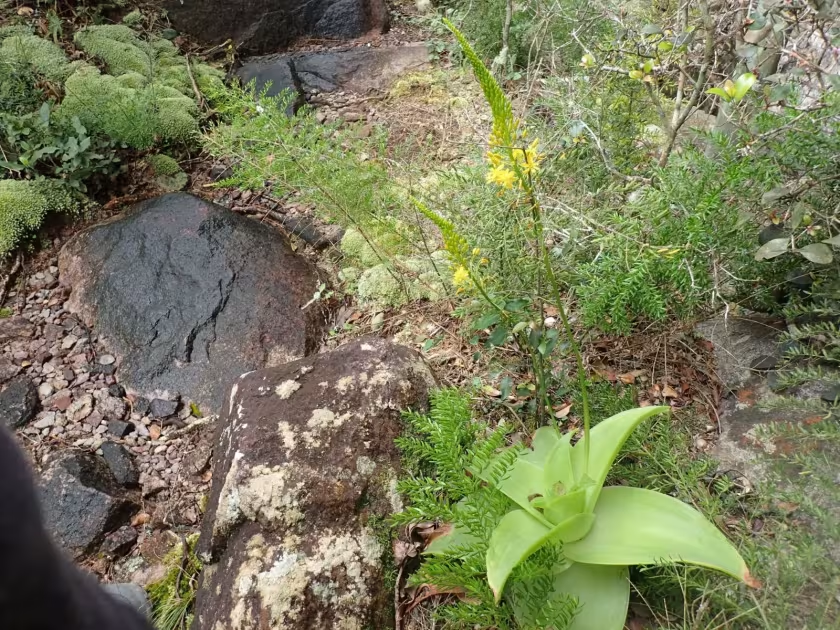
Description
Sowing dates
Seeds of Bulbine natalensis are typically sown in the spring when stable warm temperatures are achieved. Seeds should be planted in a light, well-draining substrate at a depth of no more than 0.5 cm.
For successful germination, the soil must be kept moderately moist, avoiding waterlogging, which is critical for this species. The optimal temperature for seed germination ranges from 20 to 25 degrees Celsius.
Seedlings emerge unevenly, and the process can take from two to four weeks depending on the freshness of the seeds. Once the first pair of true leaves forms, seedlings should be pricked out into individual containers.
It is important to provide young plants with sufficient indirect light, avoiding direct sunlight in the first weeks post-germination. Acclimatization to full sun should be conducted gradually.
For industrial or research purposes, it is recommended to use the tray-sowing method to manage root systems and prevent damage during transplantation.
Growing requirements
Bulbine natalensis belongs to the Asphodelaceae family and is a perennial succulent. In its natural habitat, it thrives in regions with hot climates, characteristic of the southern provinces of Africa.
The plant requires intense sunlight for normal growth. Lack of light leads to etiolated stems and a significant decrease in the concentration of bioactive compounds within the plant tissues.
It has moderate soil requirements, preferring sandy or rocky soils with excellent aeration. Water stagnation is fatal, so perlite or coarse sand must be added to the substrate to ensure proper drainage.
Watering should be regular but cautious, performed only after the top layer of the soil has completely dried out. During the winter dormancy period, watering must be minimized to prevent root neck rot.
The temperature range should be between 18 and 30 degrees Celsius during the growing season. As the plant does not tolerate frost well, it is cultivated as a potted crop in colder regions.
Harvesting
Economic use of the plant focuses primarily on harvesting the aerial parts (leaves) for phytopharmaceutical applications. Harvesting is performed once the plant reaches technical maturity, usually in the second year of vegetation.
Leaves are cut using a sharp tool, taking care not to damage the central growth point, which allows the plant to regenerate for subsequent harvests. Yield depends on lighting conditions and the consistency of mineral fertilization.
After harvesting, the plant material must be dried immediately in the shade with good ventilation or in specialized drying cabinets at temperatures not exceeding 40 degrees Celsius.
Proper drying technology is essential to preserve the alkaloids and glycosides present in the succulent leaf tissues. Dried raw material should be stored in airtight containers, protected from light.
It is important to note that due to the high moisture content of the raw material, the primary processing stage requires strict humidity control to prevent the development of mold fungi on the surface of the leaves.