
Siberian bugloss
Brunnera sibirica Steven
Description
Sowing dates
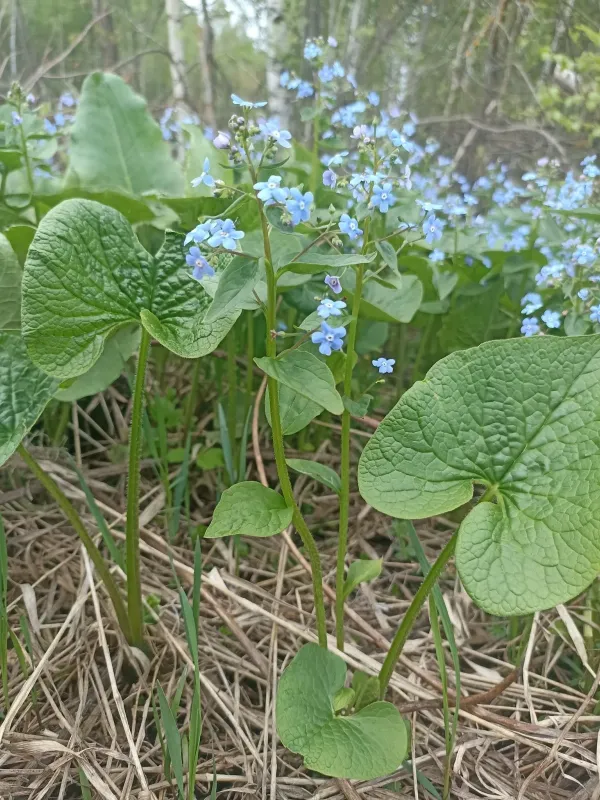
Siberian bugloss, known botanically as Brunnera sibirica, is a long-lived herbaceous perennial belonging to the Boraginaceae family. It is prized for its hardy nature and vigorous growth in cool environments.
Propagation is most efficiently achieved through the division of rhizomes, which should be performed in early spring or late summer to ensure successful establishment.
When dividing the plant, it is essential to ensure that each segment contains at least one or two healthy growth buds to allow for rapid regeneration of the foliage.
Seeds can be sown in late autumn, allowing for natural stratification during the winter months, which significantly improves the germination rates of the species.
Plants should be spaced approximately 30 to 45 centimeters apart to allow for proper air circulation and to enable the plant to form a lush, uniform ground cover.
Growing requirements
This species is highly adapted to shade and semi-shade environments. It thrives in cool forest-like conditions where it is protected from the intense direct midday sun.
Rich, moist, and well-draining soil is crucial for the optimal development of Brunnera sibirica. While it tolerates various soil types, loamy soils provide the best results.
The plant is exceptionally winter-hardy and performs well in regions with harsh winters, requiring no winter protection, as it is fully acclimated to cold climates.
Water management is the most important element of the care routine; the plant must never dry out completely, as its broad leaves will quickly wilt in drought conditions.
Applying a light layer of organic mulch annually helps retain soil moisture, suppresses weeds, and gradually improves the nutrient status of the planting bed.
Main diseases and pests
Powdery mildew is the most prevalent fungal disease affecting Siberian bugloss, particularly during seasons with high humidity and poor air circulation among the leaves.
Slugs and snails pose a consistent threat to the foliage, especially in moist and shaded garden spots where these pests tend to congregate in high numbers.
Leaf spot diseases can occasionally occur if the foliage remains wet for extended periods, making regular monitoring of plant health an important management step.
Root rot may develop if the soil is poorly drained or if the plant is subjected to stagnant water, which compromises the root system's oxygen supply.
Proper sanitation, including the removal of dead or dying plant debris at the end of the growing season, is highly effective in reducing disease pressure.