
Siberian bugloss
Brunnera macrophylla (Adams) I. M. Johnst.
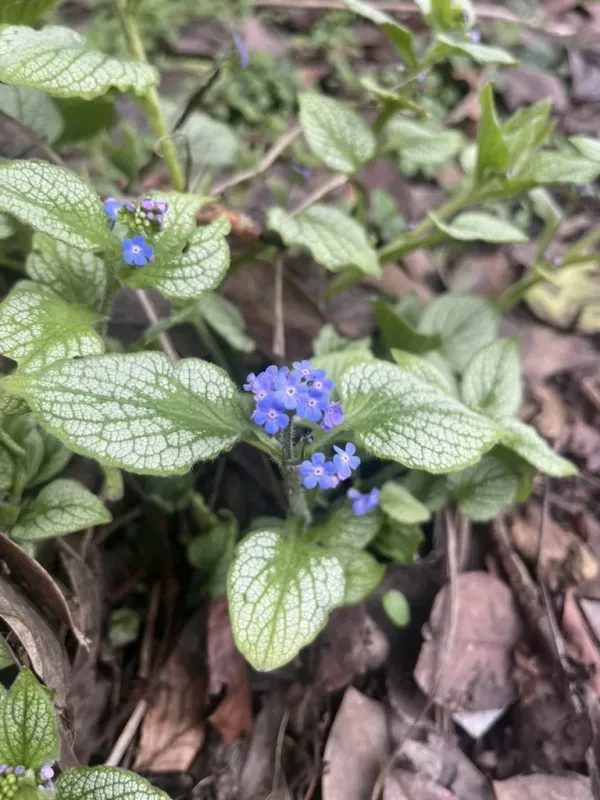
Description
Sowing dates
Sowing seeds of Brunnera macrophylla in the open ground is best performed in late autumn. This allows for natural stratification during the winter, which ensures reliable germination when temperatures rise in spring.
For spring sowing, seeds must undergo artificial stratification in a cold environment, such as a refrigerator, for at least two to three months before being planted in trays.
Since this species often does not grow true to seed, especially regarding variegated cultivars, vegetative propagation is widely considered the superior method for home gardeners.
Dividing the rhizomes is the most reliable propagation technique. This should be carried out in late summer, after the plant has finished its main growth cycle and set its buds for the next season.
Each division should include at least two or three healthy buds or 'eyes' and a section of the root system to ensure the plant establishes itself quickly in its new location.
Growing requirements
Brunnera macrophylla is a member of the Boraginaceae family, native to the Caucasus region. It is highly valued in horticulture as an essential shade-loving perennial for woodland gardens.
The plant thrives in moist, well-draining, and humus-rich soils. It prefers dappled shade, as intense direct sunlight can scorch the delicate foliage during the peak of summer.
It is remarkably hardy and can withstand low winter temperatures without special protection. This makes it a low-maintenance choice for gardeners in temperate climate zones.
Proper air circulation is important to prevent foliage issues. While the plant loves water, it is crucial to avoid waterlogged conditions, which can lead to root rot during dormant months.
Mulching the area around the base with organic material helps maintain the necessary soil moisture levels throughout the growing season and suppresses weed competition.
Main diseases and pests
Powdery mildew is the most common fungal issue for Brunnera, particularly in conditions where humidity is high and air movement around the leaves is restricted.
Leaf spots caused by various pathogens may appear on the foliage if the plants are crowded or overhead irrigation is used excessively during the evening hours.
Slugs and snails are major pests that target the foliage. They can skeletonize the leaves, severely affecting the aesthetic value of the plant in a landscape setting.
To control pests, gardeners should keep the area clean of debris where these mollusks tend to hide during the day and use bait or barriers if the infestation becomes severe.
Early identification of fungal symptoms allows for quick treatment with appropriate fungicides, ensuring the foliage remains healthy and attractive throughout the entire season.