
Browallia viscosa
Browallia viscosa Kunth
Description
Sowing dates
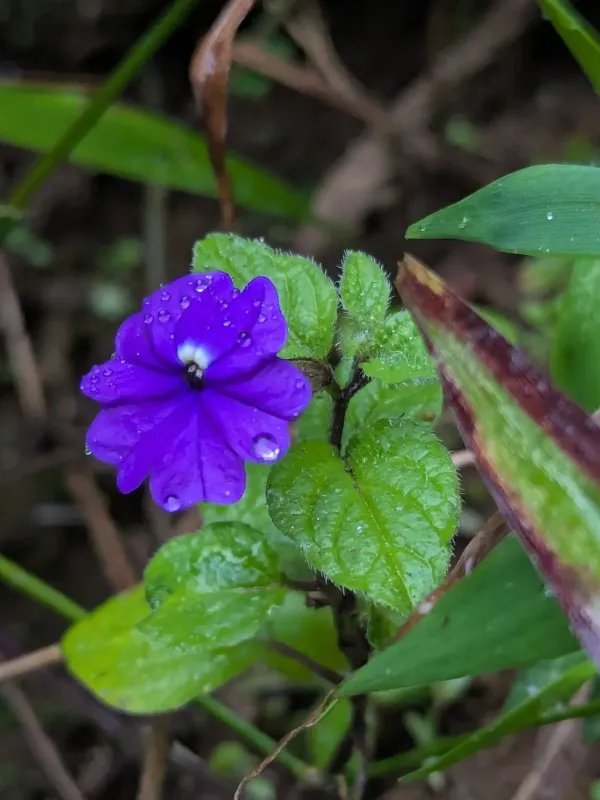
Browallia viscosa is an ornamental plant belonging to the Solanaceae family. It is widely cultivated as an annual for its vibrant, star-shaped flowers.
Seeds should be sown indoors in late winter or early spring using a high-quality seed-starting mix. The seeds are extremely small and need light to germinate.
Keep the sowing tray covered with clear plastic to maintain high humidity levels, and place it in a warm location with a temperature around 20–22°C.
Seedlings should be transplanted into individual pots once they develop their first set of true leaves, ensuring they have enough room to establish roots.
Transplanting to the final location outdoors should only occur after the last spring frost, as the plant is highly sensitive to cold temperatures.
Growing requirements
This plant thrives in bright, indirect light. While it can tolerate some sun, it performs best in sheltered spots protected from the intense afternoon heat.
The soil must be well-draining, rich in organic matter, and kept consistently moist without becoming waterlogged to prevent root rot issues.
Regular fertilization is key to blooming success. A balanced liquid fertilizer applied every two weeks throughout the growing season supports healthy development.
High humidity is beneficial for Browallia. In drier climates, misting the plants or placing them near other vegetation can help maintain the required microclimate.
Avoid planting in areas prone to heavy winds, as the slender, succulent stems of the plant are susceptible to mechanical damage.
Main diseases and pests
Aphids are a frequent concern, often clustering on the tender new growth and flower buds, causing stunted development and spreading mosaic viruses.
Spider mites may infest the foliage during periods of low humidity, leaving characteristic stippling patterns and fine webbing across the leaves.
Botrytis or gray mold is common when air circulation is poor or if the foliage remains wet for extended periods, especially in shaded garden areas.
Powdery mildew can occur in environments with high temperature fluctuations, necessitating proper spacing to ensure adequate airflow between individual plants.
Integrated pest management, including regular inspection and the use of insecticidal soaps, is the most effective approach to keeping the plant healthy.
Harvesting
Browallia viscosa is primarily utilized for aesthetic purposes, making it an excellent candidate for hanging baskets, containers, and edging for flower beds.
Deadheading faded flowers is highly recommended, as it encourages the plant to produce new blooms continuously throughout the summer and autumn months.
In landscape design, it provides a deep blue or violet color palette that complements lighter-toned flowering perennials and shrubs in garden borders.
While often used in garden settings, the stems can be used in small floral arrangements, adding a delicate touch to indoor displays for several days.
Proper care, including regular pruning of long stems, maintains the plant's bushy, compact habit, ensuring it remains an attractive feature in the garden.