
Jamaica false vervain
Stachytarpheta jamaicensis (L.) Vahl
Description
Growing requirements
Jamaica false vervain (Stachytarpheta jamaicensis) is a perennial herbaceous plant belonging to the Verbenaceae family. Native to the tropical regions of the Americas, it has become widely naturalized throughout the tropical belt due to its high adaptability.
The plant thrives in sunny locations with well-drained and fertile soils. It is quite versatile regarding soil types, including sandy and clay-loam variations, but it strictly requires adequate drainage to prevent root rot, which is a common issue in waterlogged conditions.
Climatic requirements focus on consistent warmth and high humidity levels. Since the species is highly sensitive to frost, it is often cultivated as an annual crop or in containers in cooler climates to ensure survival during the colder months.
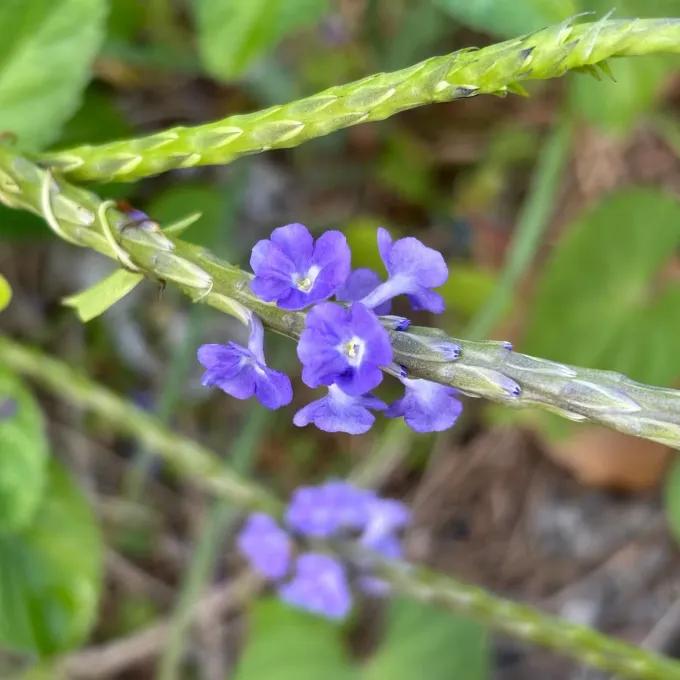
Botanically, it features an erect subshrub growth habit with opposite leaves and distinct terminal spikes. Its flowers, which are typically blue or violet, bloom sequentially along the spike and are highly attractive to pollinators, particularly butterflies and bees.
The economic value of this plant is primarily rooted in its pharmaceutical potential. The leaves and stems contain bioactive compounds used in traditional medicine to prepare infusions for digestive issues, fever reduction, and as a natural anti-inflammatory agent.
Main diseases and pests
Common health issues for this crop include fungal infections such as powdery mildew or leaf spot, which typically arise in conditions of poor air circulation and excessive ambient moisture.
Pests such as aphids, whiteflies, and mealybugs are frequently observed on the crop. They feed on plant sap, which can cause significant stress, stunted growth, and a reduction in the chemical potency of the foliage.
Effective management includes implementing integrated pest management (IPM) practices, such as biological control agents or targeted spraying with insecticidal soaps during early infestation stages.
Preventive measures are essential, including proper plant spacing to facilitate airflow and avoid overcrowded conditions that harbor pathogens and pests throughout the growing season.
Regular field scouting is critical for identifying early signs of distress. Early detection allows for physical removal of infected parts before the need for large-scale treatment arises, preserving the quality of the harvested herbal crop.