
Brazilian peppertree
Schinus terebinthifolia Raddi
Description
Growing requirements
The Brazilian peppertree (Schinus terebinthifolia Raddi) belongs to the Anacardiaceae family and is an evergreen shrub or small tree. Its native range covers tropical and subtropical regions of South America, from where it has spread to other warm regions globally.
The crop prefers sunny locations with protection from strong winds. The plant demonstrates high environmental plasticity, successfully adapting to both fertile and poor, sandy, or rocky soils.
Optimal growth conditions include a consistently warm climate without deep frosts, as mature specimens can only tolerate brief temperature drops down to -5°C. Moderate soil moisture is essential, although the plant is capable of surviving short dry spells.
In agricultural practice, it is crucial to manage the species' invasive potential. Due to its vigorous root system and ability to propagate rapidly by seed, the plant requires regular pruning to shape the canopy and limit uncontrolled spreading.
For successful growth in industrial or ornamental settings, the soil should be mulched periodically, and drainage must be ensured to avoid moisture stagnation around the root collar, which can lead to fungal infections.
Yield
The economic use of the Brazilian peppertree is primarily focused on the harvest of its fruits, known globally as "pink pepper" or "Brazilian pepper."
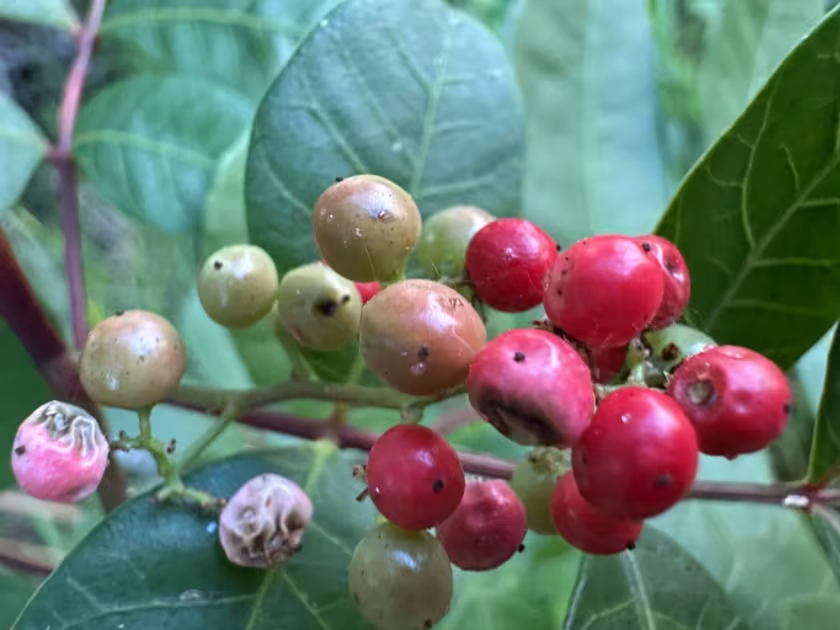
The ripe fruits, which are bright pink or red drupes, possess a characteristic spicy aroma. They are used in culinary applications as a popular spice, valued for its unique taste with resinous and citrus notes.
Beyond the fruits, essential oil extracted from the plant's leaves and berries finds application in the cosmetic industry and perfumery.
The wood of the tree is noted for its high density and strength, making it suitable for small woodworking projects or as high-quality fuel in certain regions.
The economic efficiency of cultivating the crop depends on regional markets for spices and pharmaceutical raw materials, as extracts from the plant exhibit significant antiseptic properties.
Main diseases and pests
Typical issues for this species include fungal diseases that arise from waterlogged soil or poor canopy ventilation.
Among pests, various species of scale insects pose the greatest danger, damaging young shoots and leaves and exhausting the plant's resources.
Spider mite infestations are also possible during periods of prolonged drought and high air temperatures, requiring timely acaricide treatments.
Root rots are the most serious threat when growing in heavy clay soils, making proper substrate management the primary method of prevention.
For pest management, it is recommended to employ integrated protection measures, including biological control methods and regular sanitary pruning of infected branches.