
Sinningia leucotricha
Sinningia leucotricha (Hoehne) H. E. Moore
Description
Sowing dates
Propagation of Sinningia leucotricha is primarily achieved through seeds or leaf cuttings. Seeds are very fine and must be sown on the surface of a light, moist soil mix without covering them.
Maintaining high humidity and a stable temperature between 22 and 25 degrees Celsius is essential for successful germination. Light is a critical factor for the emergence of the seedlings.
Once the seedlings have developed two sets of true leaves, they should be carefully pricked out into small, individual pots. Use a sterile, well-draining substrate to minimize the risk of damping-off.
Leaf cuttings can be taken during the active growing season. The base of the leaf should be inserted into a mixture of perlite and vermiculite, ensuring it remains stable until roots and a small tuber form.
Tuber division is another method for propagation, though it should be performed only when the plant is dormant. Ensure all cuts are calloused over before replanting to prevent bacterial rot.
Growing requirements
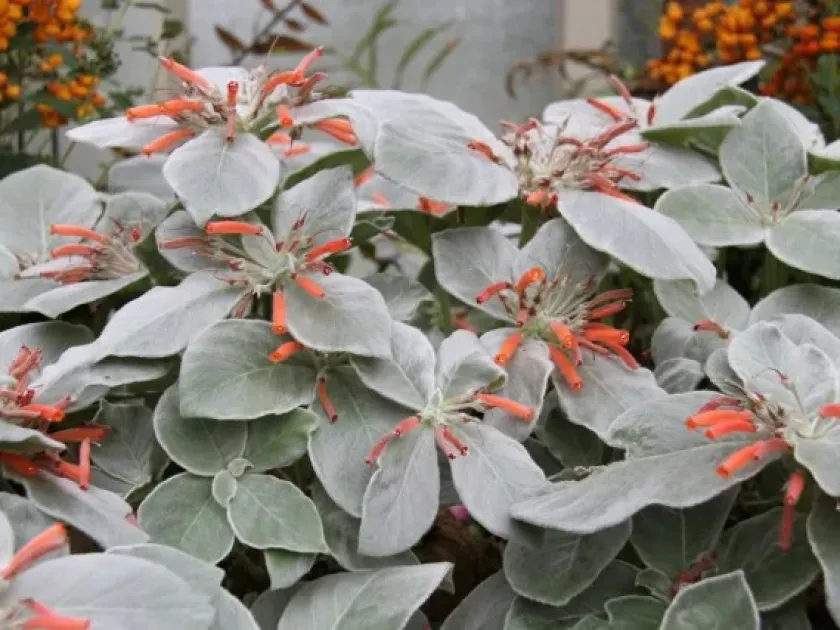
Sinningia leucotricha, a member of the Gesneriaceae family, is a caudiciform plant native to the rocky cliffs of Brazil. It is highly valued for its dense, silvery-white, fuzzy foliage.
The plant requires bright, indirect light to thrive and maintain its compact habit. Strong direct sunlight during the middle of the day can scorch the delicate leaves, causing irreversible damage.
For optimal growth, use a porous soil mix consisting of peat, pumice, and bark. This mimics the plant's natural environment and ensures that water drains away from the tuber quickly.
Watering should be done with care, especially during the active growing period. Allow the soil to dry significantly between waterings, and always avoid getting water directly on the crown or leaves.
The plant undergoes a natural dormancy phase, during which the leaves wither and fall off. Reduce watering drastically during this period and store the tuber in a cool, dry environment.
Main diseases and pests
Rot caused by overwatering is the primary threat to this species. Because the plant relies on its tuber for energy storage, any fungal pathogen attacking the rootstock can be fatal.
Spider mites are a persistent pest, especially in dry, indoor conditions. They feed on the sap and can easily hide within the thick, silvery hairs of the foliage, making them difficult to detect.
Mealybugs can also infest the plant, typically congregating in the growth points or the underside of the leaves. Manual removal combined with targeted insecticidal soaps is generally effective.
To prevent disease outbreaks, ensure adequate air circulation around the plants. Proper ventilation is more important for the health of Sinningia than high temperature or artificial fertilization.
Regular monitoring of the tuber's firmness is recommended. If the tuber becomes soft or discolored, immediate repotting into fresh, dry soil and pruning of damaged tissue is necessary.