
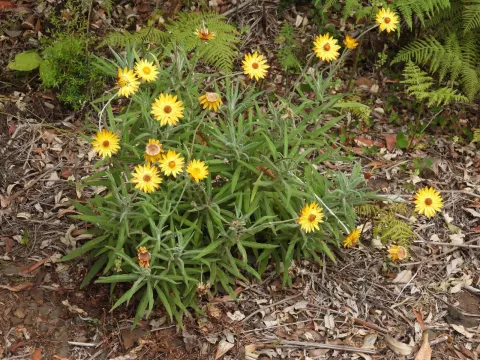
Bracteantha
Bracteantha
Sowing Bracteantha, commonly known as strawflower, is best started indoors in late February or March. Using cell trays or peat pots is recommended to avoid root disturbance during transplantation.
What the section contains

Bracteantha
The seeds have a high germination rate but require light to germinate. They should be sown on the surface of the soil and only lightly pressed down, ensuring they are not buried deep.
The optimal temperature for seed germination is between +18 and +20 degrees Celsius. It is essential to maintain consistent moisture levels without overwatering, which could lead to damping-off.
Pricking out the seedlings into individual containers is done once the first pair of true leaves appears. This practice encourages the development of a robust root system before moving to the garden.
Transplanting into the open ground should only occur after all risk of frost has passed. Late May or early June is the ideal time when the soil is sufficiently warmed by the sun.
Bracteantha is a light-loving plant belonging to the Asteraceae family. It requires a sunny, open location to thrive and develop the intense colors of its characteristic bracts.
The plant prefers light, loose, and well-drained soil. Waterlogging is detrimental to the roots, so heavy or clay-rich soils must be improved with sand or organic matter before planting.
Strawflowers are quite drought-tolerant and dislike excessive moisture. Watering should be moderate and directed at the base of the plant to avoid wetting the foliage, which reduces disease risk.
Regular fertilization with balanced mineral fertilizers is necessary for continuous blooming. The first application should be done two weeks after planting, followed by feeding during the budding phase.
Maintaining the soil around the plants by weeding and light hoeing is vital. This practice improves soil aeration and prevents the buildup of pathogens in the root zone.
Fungal diseases are the primary threat to Bracteantha, especially in high humidity. Powdery mildew often affects leaves if there is insufficient airflow around the plants.
Grey mold can manifest as a greyish growth on stems and flower heads. Infected plants should be removed immediately to prevent spread, and the area should be treated with appropriate fungicides.
Aphids and spider mites are the most common pests. These insects feed on plant sap, significantly weakening the stems and reducing the aesthetic quality of the flower heads.
Pest management relies on the timely use of systemic insecticides. Applications should begin at the first sign of infestation, ensuring all manufacturer instructions are strictly followed.
Preventive measures include avoiding dense planting schemes. Providing adequate spacing between plants allows for better air circulation, which significantly lowers the likelihood of fungal infections.
Harvesting Bracteantha for use as everlasting flowers is performed when the flower heads are semi-open. At this stage, the bracts maintain their maximum stiffness and color vibrancy.
Harvest should be conducted in dry weather once the morning dew has evaporated. Stems are cut using sharp shears or scissors to the desired length for arrangement purposes.
To dry the flowers, they should be tied into small bundles and hung upside down in a dark, well-ventilated room. This process prevents the color from fading due to direct sunlight exposure.
Bracteantha is highly valued in the industry as a premium dried flower. Because of its stiff, papery bracts, the flowers retain their shape and beauty for many months after harvesting.
These preserved flowers are ideal for interior decorations, seasonal wreaths, and dried floral arrangements, remaining a staple in ornamental horticulture across the globe.