
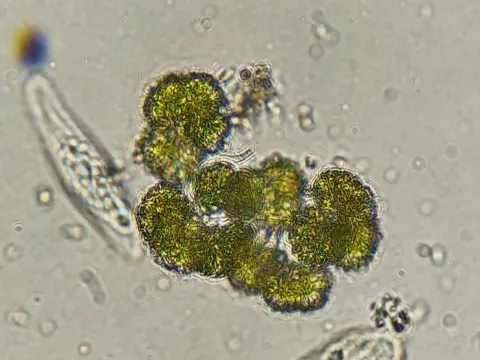
Botryococcus
Botryococcus
Botryococcus, specifically the species Botryococcus braunii, is a freshwater microalga that is not sown in the traditional agricultural sense. Instead, the process begins with the inoculation of a pure starter culture into specialized photobioreactors or controlled open ponds.
What the section contains

Botryococcus
The success of this initiation depends on the purity of the inoculum and the suitability of the prepared nutrient medium. The cultivation environment must be strictly regulated to ensure that the culture establishes itself before any contaminants can take hold.
The initial density of the inoculum is carefully calculated based on the capacity of the growth vessel. Proper spacing of cells allows for efficient nutrient uptake and prevents the early competition that can hamper growth rates.
In indoor bioreactor settings, inoculation can occur year-round. Outdoor systems, however, are more dependent on seasonal conditions, as the growth rate of this organism is significantly influenced by ambient temperatures and sunlight availability.
Strain selection is a critical management decision during the startup phase. Different races of B. braunii have varying growth rates and hydrocarbon profiles, necessitating the use of high-yield verified strains for commercial production.
Light is the most vital requirement for Botryococcus, as it is a photoautotrophic organism. High-intensity light penetration is essential to maintain photosynthetic activity throughout the entire volume of the liquid culture.
The optimal temperature for metabolic activity typically ranges between 20°C and 30°C. Maintaining these conditions is crucial, as extreme fluctuations can cause metabolic stress, reducing the cell's ability to synthesize and store energy-dense lipids.
A balanced nutrient medium containing appropriate levels of nitrogen, phosphorus, and essential minerals must be maintained. Continuous monitoring of these levels is required to prevent deficiencies that limit biomass accumulation.
Carbon dioxide supply is a mandatory aspect of the agrotechnology. CO2 is pumped into the culture medium to boost photosynthesis, directly affecting the speed of hydrocarbon production within the colonies.
Mechanical or pneumatic agitation is required to prevent cell sedimentation and ensure a uniform distribution of light and nutrients. Systems must be designed to avoid stagnant zones where metabolic waste products could accumulate and inhibit growth.
Yield in Botryococcus is characterized by the accumulation of triterpenoid hydrocarbons. These lipids can constitute up to 75% of the total dry cell weight, making it one of the most promising sources for renewable biofuels.
While the overall biomass growth rate of Botryococcus is generally slower than that of species like Chlorella, its high oil content makes it more energy-efficient for the production of biodiesel and green crude oil.
Productivity is highly dependent on the chosen cultivation method. Advanced photobioreactors that optimize light distribution can achieve significantly higher volumetric yields compared to traditional open raceway ponds.
Two-stage cultivation is often employed to maximize yield. The first stage focuses on biomass production, while the second stage involves imposing environmental stress, such as nutrient limitation, to trigger hyper-accumulation of hydrocarbons.
Downstream processing efficiency plays a major role in the net yield of the final product. The extraction of lipids from the colonial mucus requires specialized techniques, such as solvent extraction or enzymatic treatment, to ensure high recovery rates.
Contamination by invasive microorganisms, such as fast-growing green algae, fungi, or protozoa, is the primary threat to a Botryococcus culture. These invaders can outcompete the target species and quickly lead to a total loss of the crop.
Viral infections may occur in high-density cultures, leading to mass cell lysis. Strict sanitation protocols and the use of filtered water sources are essential to mitigate these biological risks during the production cycle.
Predatory zooplankton, such as rotifers or ciliates, can graze on the microalgae, drastically reducing biomass levels. Monitoring for these organisms and using exclusion filters are standard preventive measures.
Environmental stressors like excessive thermal radiation or improper pH shifts can lead to bleaching and photo-inhibition. Control systems must be robust enough to manage temperature and chemical balance autonomously.
Chemical pest control is generally avoided to maintain the quality of the biofuel produced. Instead, an integrated management approach focusing on water sterilization and strict control of input materials is used to ensure culture longevity.
Harvesting Botryococcus is unique because the cells exist in colonial aggregates surrounded by a thick mucilaginous matrix. This structure simplifies separation compared to single-celled algae, as the colonies tend to float.
Flotation is the preferred harvesting method, leveraging the natural buoyancy of the oil-laden colonies. By allowing the biomass to rise to the surface, large volumes of water can be separated efficiently, reducing the need for intensive centrifugation.
Continuous harvesting processes allow for the extraction of portions of the biomass while replenishing the medium with fresh nutrients. This method promotes stable long-term operation of the cultivation system without frequent downtime.
Once collected, the biomass requires dewatering to prepare for lipid extraction. Further processing involves breaking the cellular matrix to release the stored hydrocarbons, often followed by distillation or transesterification.
The post-extraction residue is often rich in nutrients and can be repurposed. It is frequently utilized as a nutrient-rich organic fertilizer or as a feedstock for anaerobic digesters to produce biogas, contributing to the overall circular economy of the facility.