
Boophone haemanthoides
Boophone haemanthoides
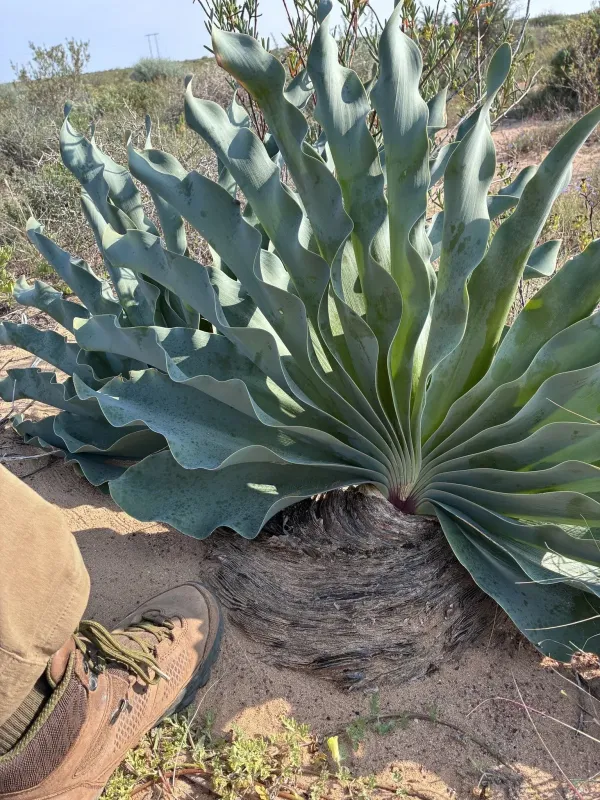
Description
Growing requirements
Boophone haemanthoides is a rare, slow-growing bulbous plant belonging to the Amaryllidaceae family. It is highly valued in horticulture for its spectacular architecture and unique physiological adaptation to extreme arid environments.
Originating from the arid regions of Southern Africa, particularly the Western Cape and Namibia, this plant is well-adapted to rocky substrates and long periods of drought. Its large, partially exposed bulb is a specialized storage organ for water and nutrients.
Botanically, the plant is distinguished by its distinctively wavy-edged, fan-like leaves that emerge after the flowering period. The bulb itself is covered in layers of papery, dry scales that provide protection against the intense desert heat.
Successful cultivation requires a highly permeable substrate, typically composed of a mineral-based mix with high grit content. The container must have excellent drainage, as the roots are highly susceptible to rot if water persists in the soil profile.
Climatic requirements are specific: the plant demands full sun and a strict seasonal cycle. Providing an artificial dormant period with minimal to no water during winter is essential to ensure the longevity of the bulb and the subsequent blooming cycle.
Main diseases and pests
The most significant threat to Boophone haemanthoides is rot caused by pathogens in the soil. Overwatering is the primary cause of decline, as the roots require significant oxygen levels to function properly during the growing season.
Pests such as mealybugs and spider mites are common adversaries in indoor or greenhouse cultivation. These pests often congregate in the crevices of the bulb scales or at the base of the leaves, where they are shielded from direct contact treatments.
Prevention involves maintaining optimal hygiene in the growing space and ensuring consistent airflow. Keeping the foliage dry during irrigation helps to mitigate the risk of fungal leaf spot diseases.
When chemical intervention is necessary, growers should opt for systemic treatments that do not cause phytotoxic stress to the bulb. It is recommended to perform small-scale tests before treating the entire specimen.
Users should exercise caution, as all parts of the plant are known to contain toxic alkaloids. Always wear protective gloves when handling the plant during repotting or pruning to prevent skin irritation or accidental ingestion.