
Blackthorn
Prunus spinosa L.
Description
Growing requirements
Blackthorn (Prunus spinosa L.) is a member of the Rosaceae family, characterized as a dense, thorny deciduous shrub. It is native to Europe, Western Asia, and North Africa, where it naturally occurs in scrublands, hillsides, and field margins due to its high ecological adaptability.
The plant is exceptionally hardy and capable of thriving in a wide range of soil types, from heavy clays to rocky, poor soils. It is remarkably drought-tolerant and can survive in exposed locations where other woody species would struggle, making it an excellent pioneer species.
In agricultural practice, blackthorn is highly valued for establishing thick, protective hedgerows. Its thorny branches provide natural security for orchards or livestock enclosures, while also serving as a vital habitat for local bird populations and pollinators during the early spring bloom.
For optimal growth and fruiting, blackthorn requires full sun exposure. While it is shade-tolerant, excessive canopy cover will inhibit the development of dense branches and reduce fruit production. Adequate spacing should be maintained during planting to allow for its vigorous root system to establish.
Maintenance involves managing its aggressive suckering habit. Growers often use pruning to keep the shrub within designated boundaries and to promote new growth. Propagation is typically achieved through root cuttings or by transplanting established suckers during the dormant season.
Yield
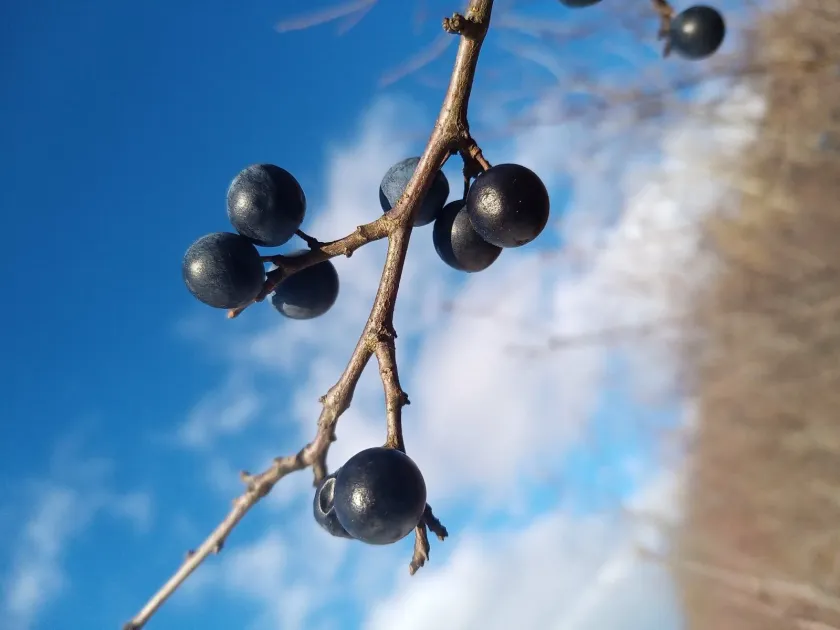
Blackthorn produces small, dark blue drupes known as sloes, which contain high levels of tannins, vitamins, and antioxidants. These fruits are prized for culinary use, particularly in the production of sloe gin, fruit liqueurs, preserves, and traditional syrups.
Beyond culinary applications, the plant serves a role in commercial agriculture as a rootstock for grafting various plum varieties. Its hardy nature imparts superior vigor and adaptability to the scion, ensuring better performance in challenging soil conditions.
Main diseases and pests
The shrub is occasionally affected by pests such as aphids and moth larvae, which can impact foliage and fruit development. Integrated pest management (IPM) strategies, including the encouragement of natural predators like ladybugs, are generally sufficient for maintaining health in a landscape setting.
Fungal diseases like leaf spot and brown rot can occur in humid, poorly ventilated sites. Preventive measures include ensuring good air circulation through thinning cuts and removing any mummified fruit or diseased branches from the previous season to prevent reinfection.
Harvesting
Harvesting usually takes place in late autumn, typically after the first frosts. Exposure to cold temperatures helps to break down the tannins in the sloe berries, significantly improving their palatability and sweetness, which is essential for making high-quality infusions.