
Yellow-wort
Blackstonia perfoliata
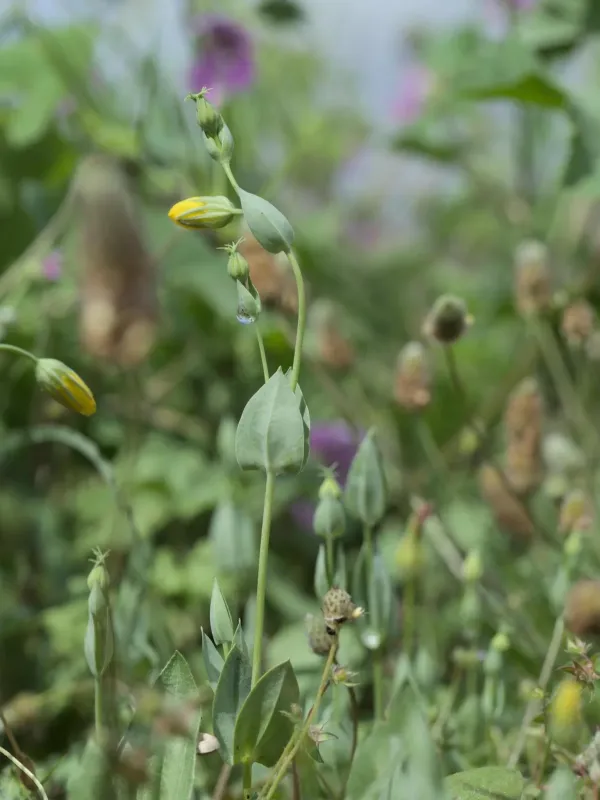
Description
Growing requirements
Blackstonia perfoliata, commonly known as yellow-wort, is a distinctive annual plant belonging to the Gentianaceae family.
It is natively found in the Mediterranean region, Western and Southern Europe, favoring habitats with high calcium content such as chalky soils and limestone hills.
The plant strictly requires sunny, open environments to thrive, as it is highly intolerant of shade and competition from dense vegetation.
Regarding soil preference, it performs best in well-drained, alkaline or neutral substrates that maintain moderate moisture throughout the growing season.
Its botanical signature is the perfoliate leaf structure, where the pair of opposite leaves are fused at the base, encircling the stem completely.
Yield
Yellow-wort is not a commercial agricultural crop, but it holds significance in botanical research and ecological restoration projects.
Its biological utility lies in the presence of secondary metabolites, specifically iridoid glycosides, which are typical for the Gentian family.
The biomass productivity is relatively low and is strictly dependent on the availability of sunlight and the mineral composition of the soil.
When used in ornamental horticulture for wildflower meadows, its density relies on natural seed dispersal and successful germination in open patches of soil.
There is currently no standardized industrial yield assessment, as the plant is primarily managed as a wild species rather than a cultivated commodity.
Main diseases and pests
The plant exhibits high resistance to many common pests due to the bitter chemical compounds contained within its stems and leaves.
The primary threats to its stability include changes in land use, such as the drainage of wetlands or the loss of open chalky grasslands.
Excessive moisture can predispose the plant to root rot, especially in poorly drained areas where pathogens can easily colonize the root zone.
Invasive grasses represent the most significant competitive threat, as they quickly overtop the yellow-wort and limit its access to vital solar radiation.
For conservation purposes, it is essential to prevent soil enrichment with fertilizers, which benefits competitive weeds more than this specialized plant.