
Yellow-wort
Blackstonia imperfoliata
Description
Growing requirements
Blackstonia imperfoliata, commonly known as yellow-wort, is an annual herbaceous plant belonging to the Gentianaceae family. It is native to the Mediterranean region, where it thrives in calcareous, well-drained soils, sunny meadows, and open rocky ground.
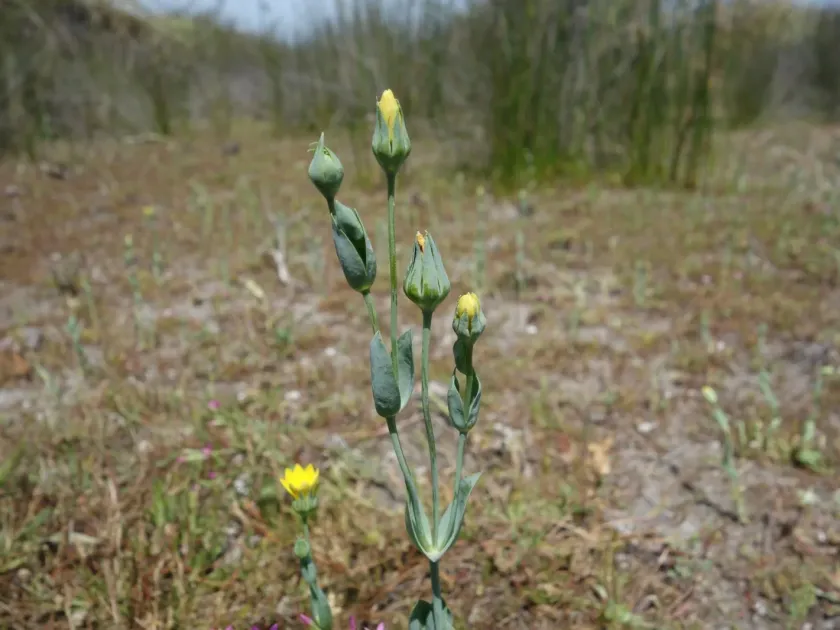
The plant is distinguished by its unique morphological feature: the leaves are connate-perfoliate, meaning pairs of leaves are fused at their bases to surround the stem. This gives the plant a structural elegance, complemented by its vibrant yellow, star-shaped flowers that bloom in the summer.
Regarding growing conditions, yellow-wort requires full sun exposure and well-drained, alkaline-to-neutral soil. It is highly sensitive to waterlogged conditions, making proper soil aeration and a sunny, open site the fundamental requirements for successful growth and development.
In terms of agricultural management, irrigation should be carefully controlled to prevent root rot. The plant performs best in undisturbed habitats and requires minimal nutrient supplementation; excess fertilizers, particularly nitrogen, can negatively affect its natural growth cycle and health.
Economically, the plant is primarily valued for its biological properties in traditional medicine and its role in biodiversity. It serves as an important nectar source for pollinators, making it a valuable addition to conservation-oriented landscapes and specialized herbal garden projects.
Main diseases and pests
The main threats to the plant are fungal diseases, typically caused by excess humidity and poor drainage. These pathogens can cause rapid wilting and root death, necessitating strict moisture management and adequate spacing between individual plants to ensure sufficient airflow.
Pests such as slugs and snails are significant threats to young seedlings and tender growth during the damp spring months. Furthermore, aphids may cluster on the flower stalks during the blossoming period, which necessitates monitoring to ensure the plants maintain their vigor.