
Bog birch
Betula glandulosa
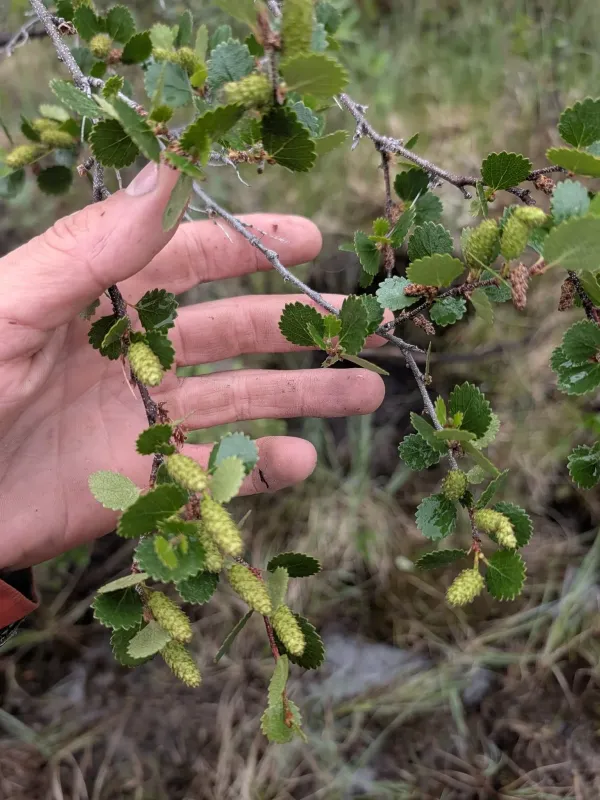
Description
Growing requirements
Bog birch (Betula glandulosa) is a deciduous shrub belonging to the Betulaceae family. It is distinct for its low-growing habit and the resinous, gland-tipped twigs that differentiate it from other related birch species.
The native range of this species extends across North America, covering subarctic regions, tundra, and alpine meadows. It is highly adapted to harsh environments where other woody plants struggle to survive.
Regarding cultivation requirements, this plant thrives in acidic, moist, and poorly drained soils. It is particularly well-suited to peatlands, bog margins, and rocky slopes where the soil remains cool throughout the growing season.
In terms of climate, the Bog birch is extremely cold-hardy and requires a cool environment to maintain its growth cycle. It performs best in full sun but can tolerate partial shade in high-latitude environments.
Agrotechnical management is relatively low, focusing primarily on maintaining adequate soil moisture. It is an excellent choice for environmental restoration, erosion control on mountain slopes, and specialized rock gardens.
Main diseases and pests
Bog birch is generally robust; however, it can be susceptible to common fungal pathogens such as rust and leaf spot if planted in poorly ventilated sites or regions with excessively warm, humid summers.
Scale insects and aphids represent the most frequent insect threats. These pests tend to congregate on young, tender growth during the spring flush, potentially causing stunted development of the shoots.
Environmental stress is a non-pathogenic threat that can weaken the plant, making it more susceptible to secondary infections. Drought stress, in particular, causes rapid browning of the leaf margins.
While the plant is highly resistant to many local pests, introduced species in botanical collections may require specific attention. Routine pruning to remove dead wood helps maintain plant health and vigor.
To ensure long-term sustainability, it is recommended to monitor the health of the foliage and ensure that the root zone remains sufficiently moist to prevent stress-induced infestations.