
Bellium minutum
Bellium minutum
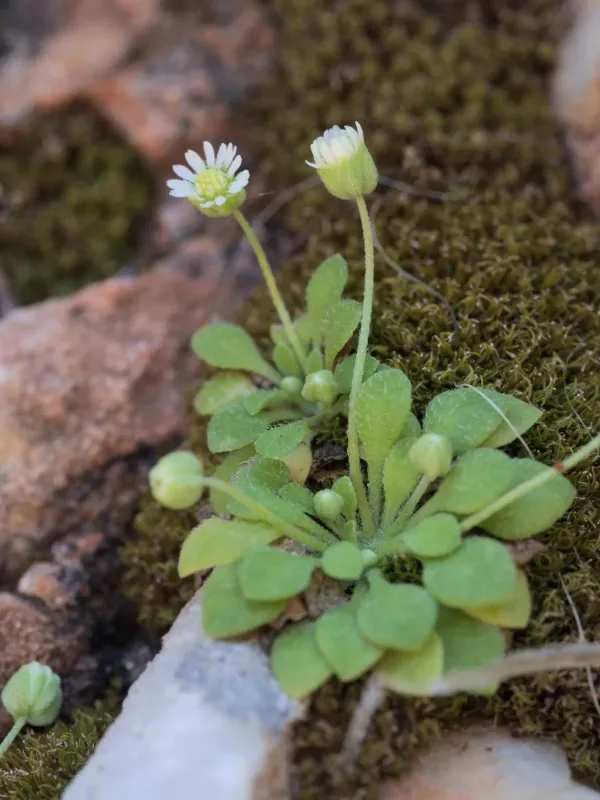
Description
Sowing dates
Sowing of Bellium minutum seeds should be carried out in the spring, once the danger of hard frost has passed and the soil begins to warm up.
For container-grown starts, sow seeds on the surface of a fine, moist potting mix, pressing them gently into the substrate without covering them.
Maintain consistent humidity and keep the containers in a bright location to encourage even germination of the small seeds.
Transplanting into the garden should occur after the last frost, ensuring plants are spaced approximately 15 to 20 centimeters apart.
Division of mature, established clumps is an effective propagation method, ideally performed in late summer or early autumn for optimal root establishment.
Growing requirements
Bellium minutum is a low-growing herbaceous perennial plant belonging to the Asteraceae family, native to the Mediterranean region.
This species thrives in sunny, open locations where it can receive direct sunlight for the majority of the day to support compact growth.
The plant requires well-drained, porous soil, as it is highly sensitive to waterlogged conditions that can compromise its root health.
It prefers neutral to slightly alkaline soil conditions and is noted for its ability to form dense, resilient mats in rock gardens.
Regular but moderate watering is necessary during prolonged dry spells to maintain the plant's vibrant green color and overall decorative vigor.
Main diseases and pests
The most significant threat to Bellium minutum is excessive soil moisture, which frequently triggers fungal infections and root rot.
In humid or stagnant environments, powdery mildew may appear on the foliage, manifesting as a thin white powder that hinders photosynthesis.
Slugs and snails are the primary pests that damage the succulent leaves of the plant, particularly during damp or rainy periods of the season.
Preventative care involves ensuring proper drainage around the base of the plant and maintaining sufficient spacing for adequate airflow.
If infestations occur, simple organic barriers or targeted pest control measures should be applied to protect the integrity of the plant cluster.