
Becium obovatum
Becium obovatum
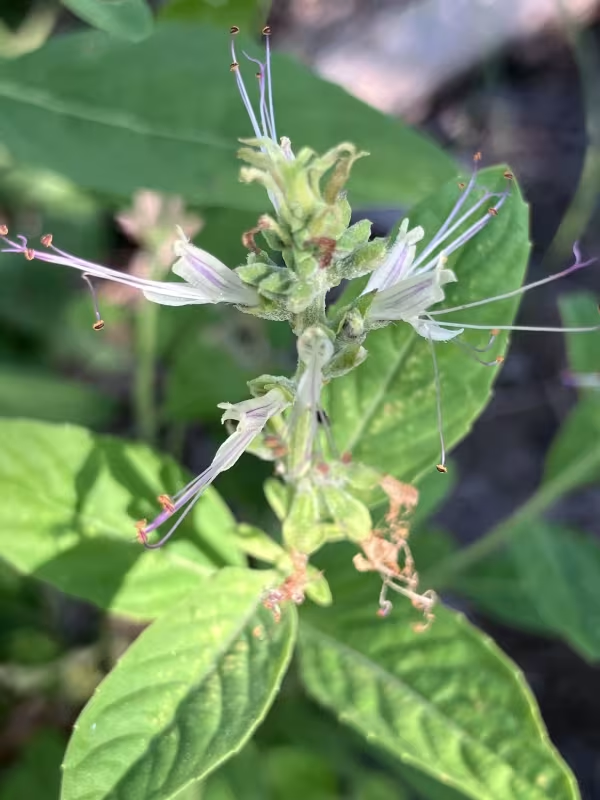
Description
Sowing dates
Becium obovatum is a perennial aromatic plant belonging to the Lamiaceae family, primarily cultivated for its volatile oil content. Propagation is typically achieved through seeds, which should be sown in a well-drained, sterile seedbed to minimize early-stage mortality.
In temperate zones, sowing begins after the last frost risk has passed, as the seedlings are sensitive to cold shocks. The seeds should be lightly covered with fine soil or vermiculite, given their size and specific germination requirements regarding light exposure.
Seedlings usually reach transplanting size within 6 to 8 weeks. During this period, consistent moisture and stable temperatures are essential to ensure uniform development and strong root initiation.
When transplanting into the field, spacing should be optimized to facilitate airflow, which is critical for reducing humidity-related diseases in the canopy. Typical spacing follows a pattern of 45x60 cm to allow for both manual weeding and potential mechanical management.
Direct seeding is possible in warmer regions, provided the soil is finely tilled and weed competition is kept at an absolute minimum during the germination phase.
Growing requirements
This species thrives in full sun exposure. Adequate light intensity is fundamental for the biosynthesis of essential oils, as shading significantly diminishes the secondary metabolite profile of the foliage.
The ideal soil profile for Becium obovatum is sandy loam, which provides excellent drainage. Heavy clay soils are generally unsuitable unless amended, as they promote root rot and restrict root expansion.
Soil pH should ideally be slightly acidic to neutral (6.0 to 7.0). Maintaining these levels ensures the maximum bioavailability of micronutrients required for healthy plant growth and oil accumulation.
Water requirements are moderate, though consistent hydration is necessary during the early stages of establishment. Once mature, the plant exhibits significant drought tolerance, making it suitable for sustainable farming practices.
Proper nutrient management involves a balanced NPK ratio applied during the initial spring growth spurt. Excessive nitrogen should be avoided as it promotes rapid vegetative growth at the expense of aromatic compounds.
Main diseases and pests
Fungal pathogens such as Rhizoctonia and Pythium represent a major threat during the seedling stage. These are often triggered by improper irrigation management or lack of soil drainage.
Pests like spider mites and aphids can become problematic, particularly in greenhouses or during dry, hot spells. Regular scouting is required to prevent infestation levels from reaching economic injury thresholds.
Leaf-eating caterpillars may occasionally damage the foliage, reducing the marketable biomass. Integrated pest management (IPM) strategies, including natural predators, are preferred over broad-spectrum pesticides.
Root-knot nematodes can impact plant vigor in infested soils, causing stunted growth and reduced yields. Crop rotation with non-host species is the primary control measure against these pests.
Weed management remains the most labor-intensive part of Becium cultivation. Using organic mulches can suppress weed growth effectively without leaving chemical residues in the crop.
Harvesting
The timing of the harvest is critical to maximize the essential oil yield and quality. The optimal stage for harvesting is generally just as the flower buds begin to open, as this corresponds with peak oil concentration.
Harvesting should be performed early in the morning after the dew has evaporated, which helps preserve the volatile aromatic compounds that would otherwise evaporate in the heat of the day.
Cutting the aerial parts should be done with sharp tools to ensure clean wounds, promoting faster regrowth for subsequent harvests. Proper sanitization of harvesting equipment prevents the spread of pathogens between plants.
Post-harvest handling requires immediate shading and drying in a well-ventilated area. Rapid drying at moderate temperatures (30–35 °C) prevents the fermentation of the plant material and preserves oil integrity.
Storage of the dried material must occur in moisture-proof containers in a cool, dark environment to protect the secondary metabolites from degradation by heat and light.