
Baptisia leucophaea
Baptisia leucophaea
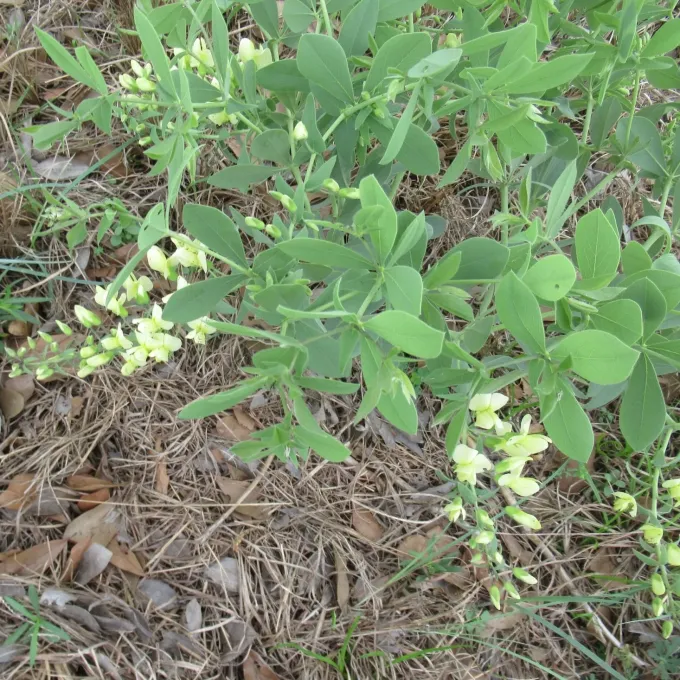
Description
Sowing dates
Seeds of Baptisia leucophaea should ideally be sown in the autumn to allow for natural cold-moist stratification during the winter months.
If spring sowing is preferred, the seeds must be scarified to break their hard seed coat, which significantly improves the germination rate.
Planting depth should be approximately 1 to 2 centimeters in well-prepared soil to ensure the seeds have sufficient moisture during the sprouting phase.
Adequate spacing between plants is essential to account for the eventual size of the mature clump and to allow for proper airflow.
As the plant develops a deep taproot, it is highly recommended to transplant seedlings when they are young or sow them directly in their final location.
Growing requirements
Baptisia leucophaea is a member of the Fabaceae family, characterized by its distinct creamy-white drooping racemes and trifoliate leaves.
The plant thrives in full sun exposure and requires well-draining soils to prevent root rot, particularly during the dormant season.
It is remarkably drought-tolerant once established, making it an excellent choice for low-maintenance landscapes and dry environments.
The plant prefers neutral to slightly acidic soil conditions and does not require frequent fertilization, as it is a nitrogen-fixing legume.
Winter hardiness is a defining feature of this species, allowing it to withstand extreme temperature fluctuations across its native range.
Main diseases and pests
Root rot is the most common issue for Baptisia leucophaea, almost exclusively caused by poorly drained soil or excessive irrigation.
Leaf spot diseases may occur in areas with high humidity, often affecting the foliage aesthetic rather than the plant's overall viability.
Weevils and certain types of caterpillars can occasionally feed on the flower buds or foliage, though large infestations are relatively rare.
Good cultural practices, such as removing debris and ensuring proper plant spacing, are usually sufficient to prevent most common threats.
Applying fungicides is rarely necessary unless the plants are under extreme stress or planted in an unsuitable high-moisture location.