
Baliospermum solanifolium
Baliospermum solanifolium
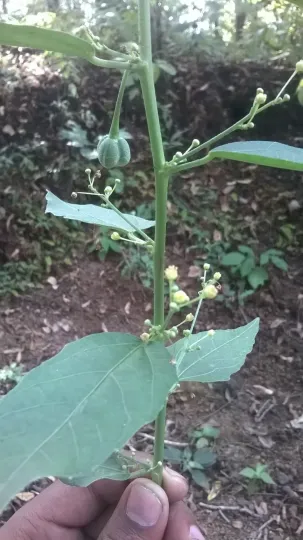
Description
Sowing dates
Propagation of Baliospermum solanifolium in its natural habitat is primarily carried out by seeds or vegetatively through cuttings. Seeds require pre-sowing treatment to improve germination rates due to their thick protective coat.
Sowing in controlled environments or nurseries is performed in the spring when soil temperatures reach stable levels above 20 degrees Celsius. The optimal sowing depth for seeds is 1–2 centimeters in loose, nutrient-rich substrate.
When using cuttings, select healthy semi-hardwood shoots and root them in greenhouses with high atmospheric humidity. Root formation typically takes between 4 and 6 weeks, depending on the temperature conditions.
Transplanting seedlings to their final location is carried out after the danger of frost has completely passed. The plant requires proper spacing to ensure adequate ventilation for the bushes, which helps in preventing fungal infections.
A crucial factor for the successful establishment of the crop is ensuring sufficient irrigation immediately after transplanting and providing shade for young seedlings during their initial weeks of adaptation to open field conditions.
Growing requirements
Baliospermum solanifolium belongs to the Euphorbiaceae family and is a typical representative of tropical flora from Southeast Asia. For optimal growth, it requires a warm, humid climate without significant periods of drought.
The crop prefers well-drained, fertile loamy soils with a neutral or slightly acidic pH. Waterlogging in the root system is detrimental to the plant, making the selection of a site with a slope or high-quality drainage systems critically important.
The plant is light-loving, although it can tolerate light partial shade during its young growth stages. Under intensive cultivation, it is necessary to provide protection from strong winds that can mechanically damage the stems.
Irrigation must be regular to maintain a constant moisture level in the root zone. During periods of active vegetative growth, the application of organic fertilizers promotes intense development of above-ground biomass.
General agronomic requirements include regular weeding and hoeing between rows to improve soil aeration, which is especially vital in heavier soil types prone to compaction during tropical rains.
Yield
The economic value of Baliospermum lies in its seeds and roots, which contain specific bioactive compounds. The yield of green mass and seeds depends directly on planting density and the overall agronomic management.
Seed harvesting is conducted as the capsules mature, which is identified by their transition to a brownish color. On a commercial scale, timely harvesting is essential to prevent the natural shattering and loss of seeds.
The amount of raw material harvested varies based on the age of the bush, as the highest accumulation of active substances is observed in mature plants during their second and third years of life.
The effectiveness of cultivation is evaluated by the yield of clean, dry weight of seeds or roots suitable for further pharmaceutical processing. The use of modern growth stimulants can potentially increase productivity by 15–20%.
Correct drying of the harvested raw material is a mandatory step that ensures the preservation of the plant's pharmacological properties and prevents spoilage during storage.
Main diseases and pests
The primary threats to Baliospermum are root rots resulting from poor irrigation management and inadequate soil drainage. Infections spread rapidly under conditions of high humidity and poor air circulation.
Among pests, various species of spider mites and aphids cause the most significant damage by feeding on the sap of young leaves and shoots. Their mass proliferation can lead to foliage deformation and a reduction in the plant's overall vitality.
To control diseases, the application of preventative fungicides and adherence to crop rotation cycles—avoiding planting after other Euphorbiaceae species—are highly recommended.
Biological pest control methods, including the use of entomophages or plant-based insecticidal decoctions, are preferred to maintain the ecological purity of the medicinal raw materials.
Regular sanitary pruning of affected plant parts helps to contain primary infection sites and prevent large-scale outbreaks within the plantation.