
Lesser water-plantain
Baldellia repens
Description
Growing requirements
Baldellia repens, commonly known as the lesser water-plantain, belongs to the Alismataceae family. It is a perennial herbaceous plant native to Europe, typically found in shallow water, riverbanks, and marshy habitats.
The plant thrives in temperate climates, preferring locations with high humidity and stable moisture levels. It is well-adapted to environments where soil saturation remains constant, reflecting its natural wetland origins.
Regarding soil requirements, Baldellia repens favors nutrient-rich, silty, or loamy substrates. It exhibits a distinct growth pattern, characterized by runners that allow the plant to spread rapidly and colonize the shore area.
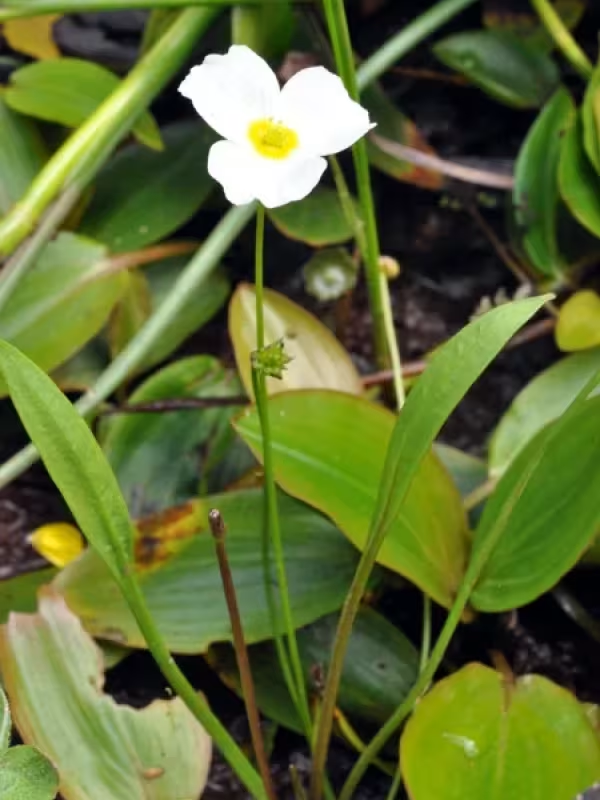
Botanically, it features lanceolate leaves and delicate white to pale pink flowers that bloom in the summer. Its compact habit makes it an ideal choice for the foreground of aquatic planting schemes.
In landscaping, this species is widely utilized for its decorative properties and its ability to act as a biofilter. By providing surface area for beneficial microorganisms, it assists in maintaining water clarity and health in artificial ponds.
Main diseases and pests
The primary threats to this species include drastic water level fluctuations and the destruction of natural wetland ecosystems, which can prevent the plant from establishing a firm root system.
Insect pests such as aphids occasionally feed on the leaves during warm spells. While rarely lethal, these infestations can be unsightly and may hinder the overall vigor of the plant during the growing season.
Fungal diseases are a risk in stagnant, poorly ventilated water conditions. Ensuring proper water flow and preventing the accumulation of decaying organic matter are key preventative measures.
The plant is highly sensitive to water pollution, particularly from runoff containing agricultural pesticides or fertilizers. Contaminated water can cause rapid leaf chlorosis and inhibited growth.
Competitive pressure from more invasive aquatic weeds can also pose a risk to established patches of Baldellia repens. Regular maintenance, such as manual weeding, is recommended to preserve the integrity of the planting area.