
Baldellia alpestris
Baldellia alpestris
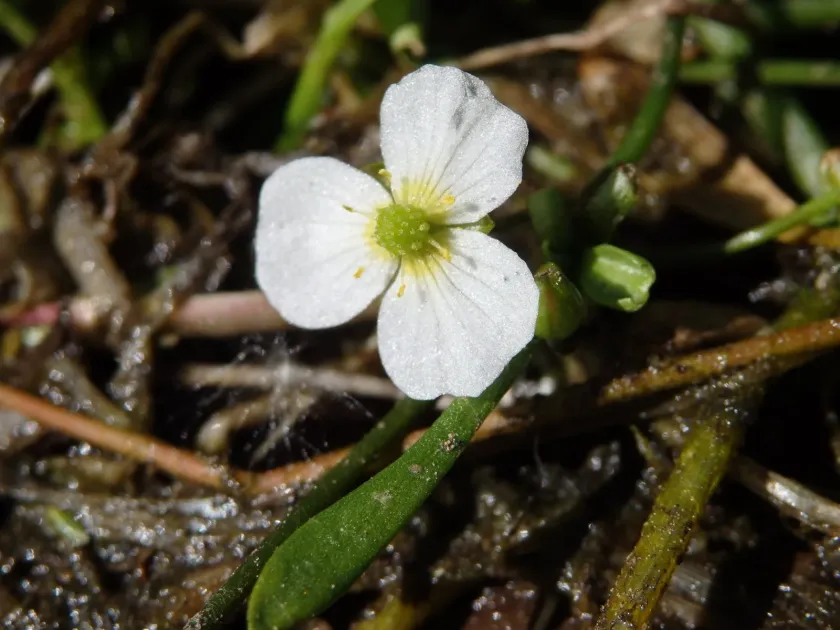
Description
Growing requirements
Baldellia alpestris is a perennial herbaceous plant belonging to the Alismataceae family. It is a rare botanical species primarily endemic to the mountainous regions of the Iberian Peninsula, characterized by its specialized adaptation to high-altitude wetlands.
The plant functions as a hydrophyte or hygrophyte, thriving in environments such as stream margins, shallow ponds, and permanently moist soil. It requires a stable hydrological regime and clean, oxygen-rich water to maintain its vital physiological processes.
Regarding soil requirements, it prefers substrates consisting of organic-rich silt, gravel, or peat mixtures. The drainage must be sufficient to prevent stagnant conditions that lead to anaerobic stress, even though the plant remains constantly submerged or saturated.
The climate requirements reflect its mountain origin. It favors cool to temperate conditions and does not perform well under intense heat, requiring cooler water temperatures to ensure successful vegetative growth and flowering.
While not a traditional agricultural crop, Baldellia alpestris holds ecological value for biodiversity restoration. It is often studied in the context of wetland management and ecological conservation, making it a valuable subject for botanical research and habitat rehabilitation projects.
Main diseases and pests
The primary threat to the stability of Baldellia alpestris populations is habitat loss due to climate change, which affects the water supply in high-altitude mountain springs and streams.
Eutrophication of aquatic environments caused by runoff from surrounding areas introduces excessive nutrients, which favor faster-growing algal species that outcompete the slower-growing Baldellia.
Pathogenic threats include fungal infections that manifest as root rot when the balance of water chemistry is disrupted. Such conditions are often triggered by improper water flow or contaminated runoff.
Invertebrate pests, particularly gastropods, can cause significant damage to the leaf tissue, affecting the plant's ability to photosynthesize effectively during the active growing season.
Management strategies for the protection of this species focus on maintaining clear water parameters and controlling invasive plant species that physically smother the Baldellia plants.