
Zambezi teak
Baikiaea plurijuga
Description
Growing requirements
Zambezi teak (Baikiaea plurijuga) is a prominent deciduous tree species belonging to the Fabaceae family. Native to the dry forests of Southern Africa, it is recognized for its high-density timber and ecological importance in its natural range.
The tree thrives in well-drained sandy soils and exhibits high adaptability to semi-arid climates. It requires a distinct dry season to undergo physiological hardening, which is essential for the development of its high-quality timber properties.
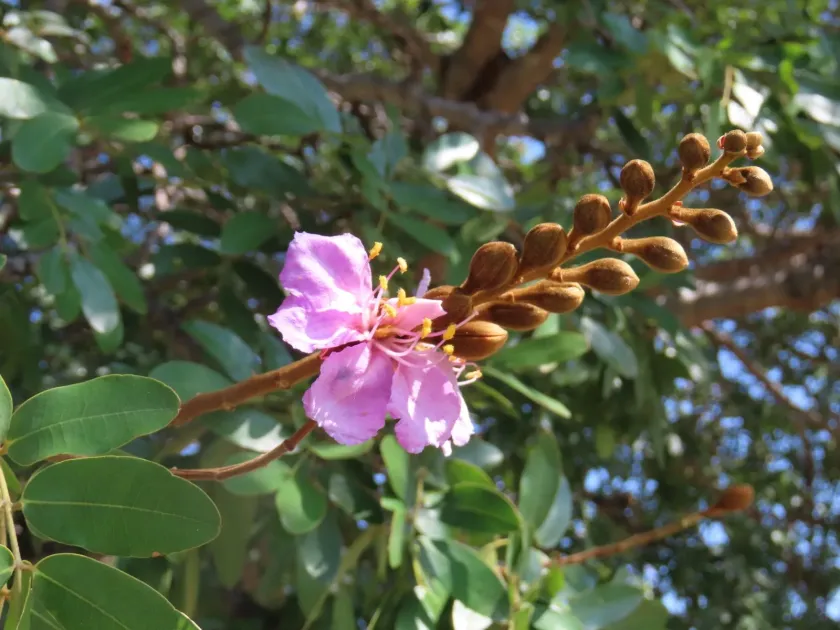
Botanically, it is known for its pinnate leaves and vibrant, showy flowers that bloom after the arrival of rains. The tree can reach significant heights, establishing deep root systems that help it survive in harsh, nutrient-poor conditions.
In terms of economic utility, Zambezi teak is highly sought after for its exceptional hardness and resistance to termites and decay. It is widely applied in high-end flooring, joinery, and furniture construction throughout the region.
Sustainable management practices focus on its nitrogen-fixing capabilities, which enhance soil health within its natural habitat. Promoting its growth is essential for maintaining biodiversity in the savanna-forest mosaic zones.
Main diseases and pests
The slow growth rate of Baikiaea plurijuga is its greatest weakness in a commercial forestry context, as it makes quick replenishment of harvested areas virtually impossible without long-term planning.
Insect pests, particularly seed-boring beetles, pose a recurring challenge for foresters. Effective seed management protocols are necessary to ensure the viability of nurseries and restoration projects.
Root rot and other fungal diseases can occur in nursery conditions if irrigation systems are not properly managed to ensure rapid drainage, emphasizing the need for strictly controlled moisture levels.
Wildfires remain a constant risk, capable of devastating extensive plantations of young Zambezi teak. Protection strategies involve creating firebreaks and maintaining careful vegetation control around young groves.
Livestock overgrazing is a significant threat to sapling survival. Implementing protective measures or temporary fencing is crucial to allow young trees to reach a size where they become less vulnerable to physical damage.