
Aztekium hintonii
Aztekium hintonii
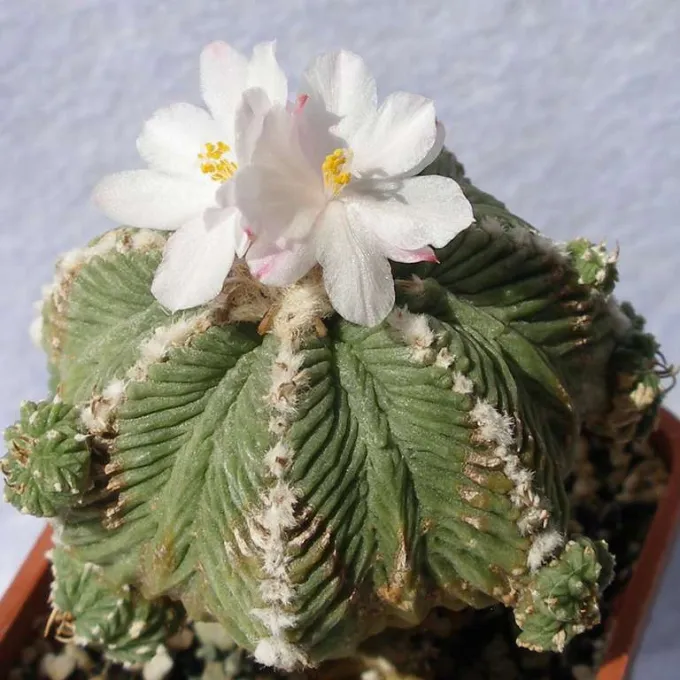
Description
Sowing dates
Propagation of Aztekium hintonii is a challenging task primarily due to the exceptionally slow growth rate of the seedlings. The ideal time for sowing is during the spring when daylight hours increase, which helps stimulate germination.
Seeds of this species are extremely fine, resembling dust, and should be sown on the surface of a sterile, well-draining soil mix without covering them. Keeping the seeds in a high-humidity environment under glass is essential for success.
Optimal germination temperatures range between 25 and 28 degrees Celsius during the day. Since the germination process can be unpredictable and lengthy, patience is required until the tiny green seedlings appear in the tray.
Once germinated, the seedlings remain fragile for a long time and must be protected from direct sunlight and excessive drying. Watering should be done using a fine mist to prevent the substrate from washing away or becoming waterlogged.
To speed up the development of this cactus, many growers choose to graft the young seedlings onto more vigorous stocks. This method allows the plant to reach maturity and start blooming much faster than growing it on its own roots.
Growing requirements
Aztekium hintonii belongs to the Cactaceae family and is native to the limestone cliffs in the Mexican state of Nuevo León. This habitat dictates its specific needs for a mineral-based substrate that mimics its natural stony environment.
In cultivation, the potting medium must be highly porous, consisting of pumice, limestone grit, and a minimal amount of organic matter. Proper drainage is the most critical factor to prevent the roots from rotting in stagnant moisture.
This cactus requires bright, filtered sunlight throughout the growing season to maintain its tight, ribbed structure. While it enjoys the sun, excessive heat without adequate ventilation during the summer can lead to sunburn on the stem.
Watering should be performed only when the soil has completely dried out. During the winter dormancy period, the plants should be kept entirely dry and in a cool location with temperatures ranging from 5 to 10 degrees Celsius.
Adequate air circulation is vital for the health of Aztekium hintonii. Good ventilation helps regulate temperature and prevents the development of fungal spores that thrive in stagnant, humid conditions around the plant.
Main diseases and pests
The most significant threat to this cactus is root rot, which typically stems from overwatering or poorly draining soil. If the stem starts to feel soft or discolored at the base, immediate action to dry out the soil is necessary.
Root mealybugs represent a serious pest that attacks the root system, often unnoticed until the plant stops growing. Regular checks during repotting and the use of systemic insecticides are standard procedures for managing these pests.
Spider mites can also be problematic, particularly in hot and dry climates. These pests puncture the cactus skin, causing corky spots that mar the beautiful, intricate pattern of the stem's ribs over time.
Fungal infections can occur if the plant is exposed to high humidity and poor ventilation. Keeping the growing area clean and ensuring consistent airflow helps mitigate the risk of these pathogens affecting the slow-growing body.
Preventative care, including annual inspection of the root system and careful monitoring of the stem texture, is essential. Early detection of any anomaly allows for timely intervention before the cactus suffers permanent damage.