
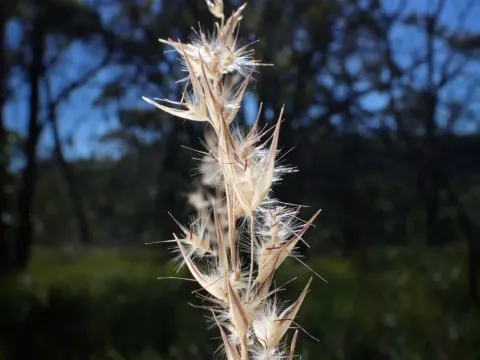
Austrodanthonia
Austrodanthonia
Austrodanthonia, commonly known as wallaby grass, belongs to the Poaceae family. It is a group of perennial grasses native primarily to Australia and New Zealand, playing a vital role in native vegetation and pastoral landscapes.
What the section contains

Austrodanthonia
Botanically, these grasses are recognized for their distinct inflorescences and tufted growth habit. The root system is deep and efficient, allowing the plant to access moisture in dry, nutrient-poor soils where other crops struggle to survive.
The crop thrives in a variety of soil types, ranging from light sandy loams to heavier clay soils. It shows remarkable resilience against environmental stress, including high temperatures and prolonged periods of drought, making it an excellent choice for low-input agricultural systems.
Agronomic management focuses on establishment phases. Due to the relatively slow growth rate of seedlings, competitive weed control is essential during the first season. Once established, the grass is highly persistent and can survive under various grazing pressures.
The primary agricultural use of Austrodanthonia is as high-quality forage for livestock, particularly sheep and cattle. It is valued for its ability to maintain green feed during dry periods, providing a consistent source of nutrition in managed grazing systems.
Austrodanthonia is generally robust and resistant to most common crop diseases. Due to its natural adaptation to local environments, it rarely suffers from major outbreaks of fungal or bacterial infections under proper management.
Pests such as grasshoppers and certain beetle larvae can occasionally cause damage to young shoots. However, these issues are typically managed by adjusting grazing schedules or supporting native insect predator populations.
Environmental stress, such as extreme waterlogging, can weaken the plant's resistance, potentially leading to root rot. Ensuring good drainage is the most effective way to prevent such threats.
Unlike intensive row crops, this grass does not require heavy chemical protection. The emphasis in maintaining crop health is placed on sustainable management practices and biodiversity preservation.
Proper grazing intensity is the most critical factor for health management; overgrazing should be avoided to allow the crown of the plant to recover and maintain its density throughout the growing season.