
Athamanta turbith
Athamanta turbith
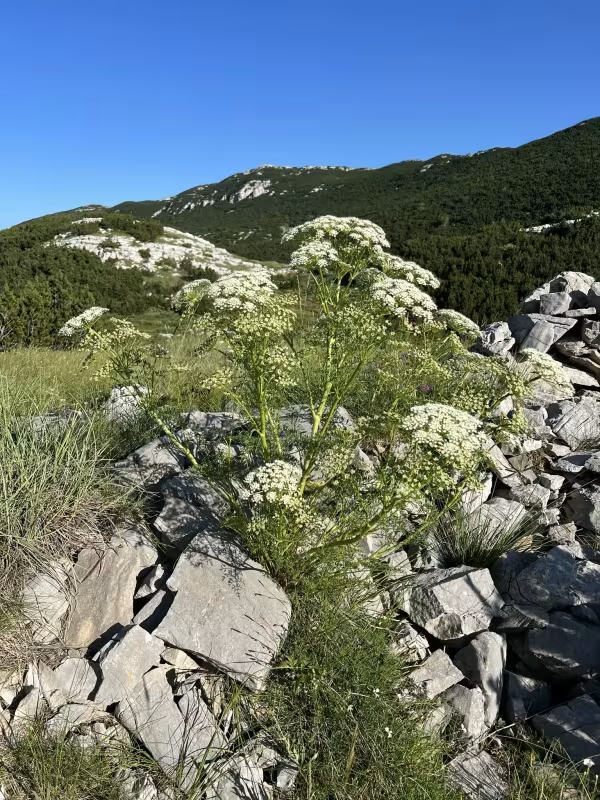
Description
Sowing dates
Sowing Athamanta turbith is typically performed in late autumn or early spring once the soil temperature reaches at least 5-8 degrees Celsius. As a perennial plant, it requires a well-prepared seedbed that can support its growth for several consecutive seasons.
The seeds benefit significantly from a period of cold stratification lasting 4-6 weeks to improve germination rates. Seeds should be sown in rows spaced 45-60 cm apart to ensure adequate space for the development of the basal rosette and subsequent flowering stems.
Planting depth should be shallow, generally between 1.5 and 2 cm. Because the seeds are small, deeper sowing often leads to poor emergence. During the first year, the crop focuses on root development, so maintaining weed-free conditions is essential for survival.
To accelerate germination during spring sowing, soaking the seeds in a mild growth stimulator for several hours may be beneficial. The target plant density is approximately 8 to 12 plants per square meter for optimal industrial output.
Consistent soil moisture is critical during the initial germination phase. Once established, the plant becomes more resilient to fluctuations in water availability, but early irrigation management remains the foundation of a successful crop establishment.
Growing requirements
Athamanta turbith is a hardy herbaceous member of the Apiaceae family, naturally adapted to rocky slopes and high-light environments. For successful cultivation, it requires full sun exposure to maximize the synthesis of essential oils and other secondary metabolites.
The plant thrives in light, well-drained soils, preferably with a neutral to slightly alkaline pH. Heavy, compacted, or waterlogged soils should be avoided, as the root system is highly susceptible to rot if excess moisture persists in the root zone.
This species exhibits excellent drought tolerance once established, thanks to its deep taproot. However, for maximum biomass production, supplemental irrigation during peak growth periods is recommended to avoid premature wilting and stunted development.
Fertilization should be balanced, focusing primarily on phosphorus and potassium to encourage strong root development and winter hardiness. Excessive nitrogen fertilization should be strictly avoided as it promotes leafy growth at the expense of root quality.
Good air circulation around the plants is essential for disease prevention, especially in humid regions. Proper spacing and site selection on elevated or sloped ground can significantly improve the longevity of the plant stand.
Main diseases and pests
The primary threats to Athamanta turbith include fungal pathogens such as root rot and powdery mildew, particularly in environments with high humidity and poor ventilation. Keeping the area free of excess debris helps reduce pathogen buildup.
Pests such as aphids and specific umbellifer-loving caterpillars can cause damage to foliage and flowering heads. Integrated pest management, focusing on biological controls and regular field monitoring, is the preferred approach for commercial growers.
Slugs and snails may damage younger plants, particularly in early spring. Installing physical barriers or using low-impact pest control methods around the perimeter of the plot can effectively manage these populations without chemicals.
Crop rotation is a vital agronomic practice for this species. To prevent the accumulation of soil-borne diseases, it is advisable not to return the crop to the same plot for at least four to five years, alternating with non-Apiaceae species.
Regular inspection of the root crown is recommended during the growing season. Early detection of decay allows for the removal of affected plants, preventing the spread of infection throughout the field and protecting the overall harvest quality.
Harvesting
Harvesting for medicinal purposes occurs after the second or third year of growth, when the root system has accumulated a sufficient concentration of active substances. The best time for harvest is late autumn, after the plant has entered its dormancy phase.
For aerial parts, the harvest takes place during the peak flowering stage. Stems should be cut at a height of 10-15 cm above the ground. Harvesting should only be conducted on dry days to prevent mold growth during the drying process.
Harvested roots must be cleaned immediately by washing away all soil particles. Drying should occur in a well-ventilated, shaded area or a temperature-controlled dryer at a maximum temperature of 45 degrees Celsius to preserve essential compounds.
Seed harvesting requires monitoring the umbels as they change color to a brown, mature state. To prevent heavy losses, seeds should be collected just before they are ready to shatter, followed by indoor ripening and threshing.
Proper storage is essential for maintaining product quality. Once dried, the material should be kept in airtight containers in a cool, dark, and dry environment. Following these protocols ensures the long-term stability of the plant's medicinal properties.