
Sea Astrodaucus
Astrodaucus littoralis
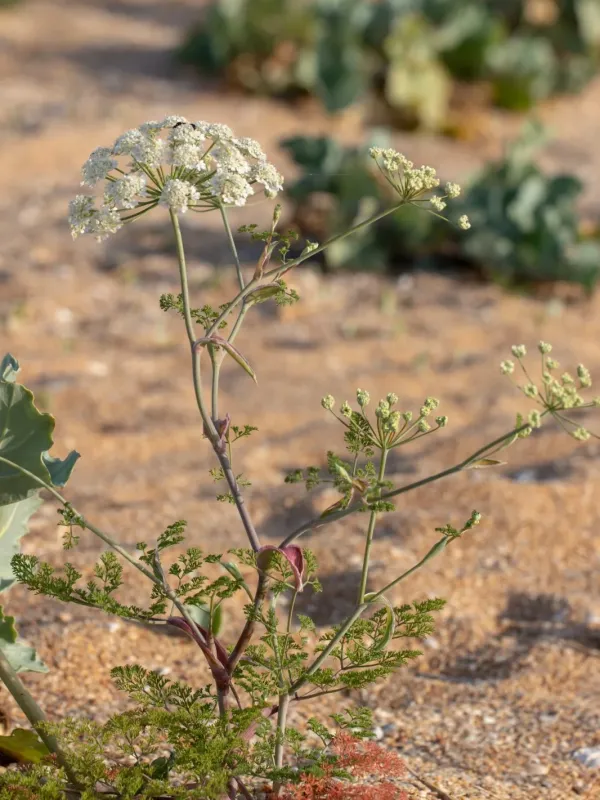
Description
Sowing dates
Sowing should be performed in autumn or early spring to allow for natural or induced seed stratification, which is critical for uniform germination. Seeds should be placed at a depth of 1–2 cm.
Planting patterns should account for the mature size of the plant. A recommended spacing is 45–60 cm between rows and approximately 30 cm between plants within the row to ensure adequate airflow.
After sowing, mulching the soil surface with a thin layer of sand or small gravel is recommended. This practice replicates the plant's natural habitat and prevents the formation of a soil crust that might hinder seedling emergence.
During the initial growth stages, moderate irrigation is necessary. Once the plants reach the 3–4 leaf stage, their water requirements drop significantly as the taproot establishes itself and the plant becomes more independent.
For commercial production, a nursery-grown seedling method can be used to ensure a consistent stand. Seedlings should be transplanted to the field at 40–50 days old, once the danger of spring frosts has completely passed.
Growing requirements
Sea Astrodaucus (Astrodaucus littoralis) is a herbaceous perennial plant belonging to the Apiaceae (parsley) family. It is naturally adapted to coastal habitats, typically thriving in sandy and rocky soils with excellent drainage.
The crop demonstrates remarkable resilience to saline substrates. It grows optimally in Mediterranean and Black Sea climates, exhibiting strong tolerance to drought conditions and high levels of direct solar radiation.
For successful cultivation, sites with high light exposure are essential. The plant is highly sensitive to waterlogging, necessitating the implementation of proper drainage systems or cultivation on elevated beds when grown on heavier soil types.
The ideal soil pH for this species ranges from neutral to slightly alkaline. The plant does not perform well in acidic conditions, often requiring liming if the soil profile shows signs of acidification.
Biologically, the plant develops a deep, robust taproot system, which allows it to scavenge for water in deep soil horizons. This adaptation makes it a promising crop for sustainable agriculture in arid regions where irrigation resources are limited.
Main diseases and pests
Due to the high concentration of essential oils in its tissues, Sea Astrodaucus possesses natural resistance to many common garden pests. However, high humidity can occasionally lead to fungal issues, such as powdery mildew.
Soil-dwelling pests, particularly wireworms, represent the primary threat to young plantings. Implementing a strict crop rotation schedule and avoiding planting after other Apiaceae members significantly reduces infestation risks.
Colonies of aphids may occasionally colonize the flower stalks. In such instances, biological controls or insecticidal soaps are preferred to maintain the crop's ecological integrity and avoid chemical residues.
Root rot occurs primarily due to poor drainage and water stagnation. Maintaining proper aeration through regular weeding and shallow cultivation of the inter-row spaces is the most effective preventative measure.
Regular monitoring of the field is crucial, especially during the flowering period. Early detection of any pathogens allows for targeted spot treatment, preventing the spread of diseases across the plantation.
Harvesting
The harvest timing is determined by the intended use of the plant material. For aromatic foliage, the harvest should occur before the onset of mass flowering to ensure maximum essential oil content in the leaves.
Seed collection is performed when the umbels turn brown. Early morning harvesting is advised to minimize seed shattering and ensure the highest quality of the harvested material.
Harvested material must be dried promptly in a shaded, well-ventilated area. High temperatures should be strictly avoided during the drying process to prevent the loss of volatile aromatic compounds.
While mechanical harvesting equipment can be utilized, manual harvesting is often preferred for smaller plots to preserve the integrity of the umbels and ensure the marketability of the final product.
The final product should be stored in airtight containers away from heat and direct sunlight to maintain the potency and medicinal properties of the Sea Astrodaucus for an extended shelf life.